
Mohammad Tahir Zamani,* Sayed Hassan Hassan, Ezatullah Popal, Hamza Haidari, Saeed Ahmad Khadarkhil, Abdul Saboor Moshwani, Abdullah Khan kamalzai
Author affiliations
Architecture Department, Engineering Faculty, Paktia University, Gardez 2201, Paktia, Afghanistan
*Corresponding author.
tahir1zamani@pu.edu.af, tahir1zamani@gmail.com (M. T. Zamani)
hassan.hassan.afghan.24@gmail.com (S. H. Hassan)
ezatullahp69@gmail.com (E. Popal)
hamzahaidari66@gmail.com (H. Haidari)
saidahmadihsas21@gmail.com (S. A. Khadarkhil)
saborkhan66@gmail.com (A. S. Moshwani)
abdullahkhankamalzai848@gmail.com (A. K. kamalzai)
History: Received 24 December 2025 | Revised 1 February 2026 | Accepted 11 February 2026 | Published online 19 March 2026
2383-8701/© 2026 The Author(s). Published by solarlits.com. This is an open access article distributed under the terms and conditions of the Creative Commons Attribution 4.0 License.
Citation: Mohammad Tahir Zamani, Sayed Hassan Hassan, Ezatullah Popal, Hamza Haidari, Saeed Ahmad Khadarkhil, Abdul Saboor Moshwani, Abdullah Khan kamalzai, Achieving Zero-Energy Housing in Afghanistan: an Integrated Life-Cycle Assessment and Retrofit Model for Ghazni Province, Journal of Daylighting, 13:1 (2026) 124-142. doi: 10.15627/jd.2026.8
Abstract
The residential building sector in Afghanistan (AFG) is a significant contributor to energy consumption and greenhouse gas (GHG) emissions, exacerbated by non-adherence to architectural standards and a critical lack of localized energy-efficiency (EE) research. This study bridges this gap by developing and validating a novel, socio-technical retrofit model for Zero-Energy Housing (ZEH) tailored to the specific context of Ghazni Province. The novelty of this work lies in the rigorous localization of global ZEH principles to AFG’s low-income, post-conflict context and the pioneering integration of a full lifecycle carbon assessment within this localized framework. Employing a mixed-methods approach, the research integrates computational energy simulation, embodied carbon assessment, and primary socio-technical data from household surveys and expert interviews. This integration allows for a holistic diagnosis of the existing housing stock, identifying profound inefficiencies such as inadequate insulation, non-energy-efficient fenestration, and reliance on carbon-intensive materials. In response, a localized four-pillar (Awareness, Building Envelope, Clean Energy, Policy) design framework is proposed and rigorously simulated. Results for this context demonstrate a 33% reduction in Energy Use Intensity (EUI), a 64.4% decrease in heating demand, and a 27.9% reduction in cooling demand. Furthermore, the model achieves a 35% reduction in embodied carbon and, through integrated rooftop solar photovoltaics (PVs), meets 102% of annual energy demand, realizing a net-zero operational energy balance. An initial economic assessment indicates a payback period of 13-15 years for the integrated retrofit package, underscoring the critical role of financial mechanisms for feasibility. This research provides an evidence-based, integrated blueprint that advances global ZEH principles by grounding them in local socio-economic and climatic realities. It offers actionable recommendations for policymakers, architects, and builders, focusing on building code reform, lifecycle carbon mitigation, and community engagement, thereby establishing a foundational pathway for sustainable housing transition in AFG and similar regions.
Keywords
zero-energy housing, sustainable retrofitting, building performance simulation, embodied carbon, climate-adaptive design
Nomenclature
| AFG | Afghanistan |
| BIM | Building Information Modeling |
| GHG | Greenhouse Gas |
| PV | Photovoltaic |
| EE | Energy-Efficiency |
| WWR | Window-to-Wall Ratio |
| ZEH | Zero-Energy Housing |
| SPSS | Statistical Package for The Social Sciences |
| EUI | Energy Use Intensity |
| EIFS | Exterior Insulation and Finish System |
| ZEB | Zero-Energy Building |
| PVC | Polyvinyl Chloride |
| HVAC | Heating, Ventilation, and Air Conditioning |
| XPS | Extruded Polystyrene |
| BEM | Building Energy Modelling |
| PCC | Plain Cement Concrete |
| RCC | Reinforced Cement Concrete |
| CIE | International Commission on Illumination |
| AFN | Afghani Currency |
| USD | United States Dollar |
| ABC | Afghan Building Code |
| BMS | Building Management Systems |
| LED | Light-Emitting Diode |
| ASHRAE | American Society of Heating, Refrigerating, and Air Conditioning Engineers |
| NZEB | Net Zero Energy Building |
| LEED | Leadership in Energy and Environmental Design |
| LCCA | Life-Cycle Cost Analysis |
| LCA | Life Cycle Assessment |
1. Introduction
The global building sector is a paramount contributor to worldwide energy consumption and GHG emissions, accounting for over one-third of final energy use and nearly 40% of total CO2 emissions [1]. In response to this environmental burden, the concept of the Zero-Energy Building (ZEB) has emerged as a critical pathway toward sustainable development, aiming to achieve a state where the annual net energy consumption is balanced by on-site renewable energy generation [2,3]. The foundational principle of the ZEB paradigm is to first drastically reduce energy demand through supremely efficient design and building envelope optimization before meeting the residual energy needs with renewable sources [4,5]. This approach is operationalized through rigorous building standards like the Passive House standard, which emphasizes super-insulation, airtightness, and the maximization of passive solar gains and natural ventilation to minimize the need for active mechanical systems [6].
The performance of such buildings is typically evaluated through a triad of key areas: thermal and physical comfort conditions, the efficiency of building components and systems, and the critical annual energy balance [7].
The strategies to achieve this high performance are various and often layered. They range from passive design measures, such as optimizing building orientation, glazing specifications, strategic shading, and high-performance insulation [8,9], to the integration of active and smart systems for lighting, heating, ventilation, and air conditioning (HVAC) that respond dynamically to occupant needs and environmental conditions [10]. The urgency of this transition is underscored by the building sector's substantial share of the global energy pie, a figure starkly highlighted by its approximate 40% contribution to the European Union's total energy consumption, demonstrating a massive potential for savings and efficiency gains [11]. This challenge is even more acute in developing countries, where rapid urbanization, limited energy resources, and economic constraints create a perfect storm of high demand and inadequate infrastructure [12]. In these contexts, the role of urban morphology, the study of a city's form, the arrangement of its buildings, and their spatial structure, becomes critically important, as it can either exacerbate or mitigate energy demand through its influence on solar access, wind patterns, and microclimates [13,14].
However, the universal or direct application of ZEB principles, often developed in and for Western technological and economic contexts, frequently stumbles when confronted with the unique realities of specific regions. These models can overlook critical localized factors such as severe economic constraints, deeply ingrained cultural and living practices, the availability and cost of materials, and specific, often harsh, climatic conditions [15]. This disconnect is acutely evident in AFG, a nation where the residential building sector is characterized by a widespread non-adherence to formal architectural and EE standards. The fundamental purpose of a residential building, to provide shelter, comfort, privacy, and a space for social interaction that ensures the physical and psychological well-being of its occupants [16,17], is often compromised by these inefficiencies. The Afghan housing stock, ranging from individual dwellings to multi-unit apartments intended for permanent occupancy [18,19], suffers from a lack of enforced building codes, limited technical knowledge, and economic challenges, resulting in a building stock that is a major source of excessive energy consumption and environmental impact [20]. Research focusing specifically on EE and ZEBs in the Afghan context remains critically underexplored, creating a significant gap between global sustainable building paradigms and local construction practice, a gap that is particularly pronounced and damaging in climatically severe regions like Ghazni Province.
Despite this proven framework, the principles of ZEBs for reducing the environmental footprint of the global building sector, their direct application in AFG is fraught with challenges. Universal models often fail to account for the specific economic constraints, cultural practices, material availability, and climatic conditions of regions like Ghazni Province. The residential building sector in AFG is characterized by a widespread non-adherence to architectural and EE standards, leading to a housing stock that is profoundly energy-inefficient. This inefficiency, driven by inadequate insulation, non-energy-efficient fenestration, and poor climate-adaptive design, is exacerbated by a lack of enforced building codes and limited local technical knowledge. Consequently, a critical disconnect exists between global ZEB paradigms and their practical implementation in AFG, resulting in excessive energy consumption, environmental impact, and a reduced quality of life for residents. This study addresses a tripartite gap: (1) a knowledge gap in the energy performance of Ghazni's housing stock, (2) a methodology gap in adapting global ZEB principles to this specific context, and (3) an implementation gap due to the lack of enforceable, localized retrofit frameworks.
This study is guided by the following primary research question: How can a localized retrofit model be developed to bridge the gap between global ZEB principles and the specific socio-economic, cultural, and climatic context of residential housing in Ghazni Province, AFG. To address this, the following sub-questions are posed. First, what is the current state of EE in the residential housing stock of Ghazni Province? Second, what are the key architectural, material, and behavioural factors contributing to EE in these homes? Third, what lessons from international ZEB case studies and local vernacular architecture can be adapted and integrated into a feasible model for the Ghazni context?
The overarching aim of this research is to develop a practical and context-sensitive framework for improving EE and advancing towards ZEH in Ghazni Province, AFG. This aim will be achieved through the following specific objectives. The first objective is to conduct an integrated assessment of the current energy performance of Ghazni's residential housing stock using computational simulation and field data. The second is to identify and analyse the principal factors, including design, construction materials, and systems, responsible for excessive energy consumption. The third objective is to propose a localized retrofit model that synergizes technical interventions, such as building code amendments, renewable energy integration, and phased retrofitting protocols, with socio-cultural strategies like targeted public awareness campaigns. Finally, the fourth objective is to demonstrate the potential impact of this model by quantifying its expected reduction in household energy consumption through comparative simulation analysis.
This study holds significant academic and practical value. Academically, it addresses a critical knowledge gap by being one of the first dedicated studies to explore ZEB principles within the unique Afghan context. It moves beyond generic sustainability models to develop a deeply contextualized framework, thereby contributing to the body of knowledge on localized sustainable design in post-conflict and developing regions. The novelty of this work lies not only in its focus on a severely under-researched region but also in its integrated, socio-technical approach. By moving beyond a purely engineering-focused retrofit model to one that synergizes technical solutions with socio-economic and cultural strategies, this research addresses the root causes of implementation failure commonly seen in developing regions.
Practically, the study offers a tangible roadmap for a wide range of stakeholders, including architects, urban planners, policymakers, and builders in AFG. The proposed retrofit model demonstrates a potential to reduce household energy consumption by up to 50 , presenting a direct economic benefit to residents and a significant reduction in environmental impact. By establishing a foundation for future applied research and real-world implementation, this study serves as a critical first step towards a sustainable and energy-secure residential sector in Ghazni and similar provinces, demonstrating how global technical knowledge can be effectively translated into local action.
The remainder of this paper is structured as follows. Section 2 provides a systematic literature review, synthesizing global principles, international case studies, and vernacular insights to identify the research gap. Section 3 details the geographical and contextual background of Ghazni Province. Section 4 presents the mixed-methods methodology, including case study selection, social survey, energy simulation setup, and retrofit scenario development. Section 5 presents and discusses the results, including the baseline energy assessment, the performance of proposed retrofit packages, and their socio-technical implications. Finally, Section 6 concludes the study by summarizing the key findings, acknowledging limitations, and suggesting directions for future research.
2. Literature review: from global principles to localized gaps
To position this research within existing scholarship, a systematic review of literature across three key domains is presented: (1) the evolution and core principles of the ZEB paradigm, (2) international and regional case studies of high-performance and retrofit projects, and (3) insights from vernacular architecture and building morphology studies, particularly in similar climatic and cultural contexts. This synthesis aims to identify transferable strategies, contextual mismatches, and critical knowledge gaps that inform the present study's approach.
2.1. Global ZEB principles and retrofit strategies
The foundational principle of the ZEB paradigm is to first drastically reduce energy demand through supremely efficient design and building envelope optimization before meeting the residual energy needs with renewable sources [4,5]. This approach is operationalized through rigorous building standards like the Passive House standard, which emphasizes super-insulation, airtightness, and the maximization of passive solar gains and natural ventilation [6]. The strategies to achieve this are layered, ranging from passive design measures (e.g., optimizing orientation, glazing, and insulation [8,9]) to the integration of active smart systems [10]. However, the universal application of these principles, often developed in Western contexts, frequently stumbles when confronted with unique regional realities such as severe economic constraints, cultural practices, and specific climatic conditions [15].
2.2. Lessons from international and regional case studies
A wealth of international case studies provides valuable, yet context-specific, lessons for achieving high performance in residential buildings. In the United States, for example, a series of projects in California demonstrates the impressive scalability of ZEB principles. These range from the deep-energy retrofit of a 1950s home (Fortunato House) using advanced insulation, airtightness testing, heat recovery ventilators, and PVs, to new constructions (Cottle House) and projects adhering to the rigorous Passive House standard (Oberlin Passive House), which employ super-insulation, triple-glazed windows, and ground-source heat pumps [21]. Furthermore, the Sol Lux Alpha project proved that ZEB principles are equally applicable to multi-family apartment buildings, utilizing individual heat pumps and a shared solar array [21]. In colder, drier climates akin to parts of AFG, research in Tabriz, Iran, demonstrated that even without high-tech solutions, intelligent architectural design alone, such as optimizing window placement and internal room arrangement for maximum solar gain in winter, can significantly reduce heating energy consumption and improve indoor thermal comfort [22].
The Central Asian and Middle Eastern contexts offer particularly relevant insights. In Uzbekistan, a pioneering near-ZEB utilized high-performance insulation materials like polyurethane foam and mineral wool, triple-glazed argon-filled windows, and a sizable rooftop solar array to achieve an annual energy consumption of 60 kWh/m², a fraction of that of conventional local buildings [23]. Similarly, a comprehensive study in Jordan, a country with a hot, arid climate and significant energy dependency, combined statistical data and public surveys to design culturally attuned prototype homes. These designs, featuring cube-like forms, local stone, optimized fenestration, and solar water heaters, achieved remarkable energy savings of 55-60 , proving that near-net-zero status is both technically achievable and economically viable in such settings [24]. Studies from North Africa further enrich the palette of solutions by highlighting the inherent efficiency of traditional architectural wisdom. Research in Morocco analysed the performance of traditional courtyard houses, finding that the central courtyard effectively shields interior rooms from direct solar radiation in summer, maintaining cooler temperatures passively [25]. In Egypt, studies of the "Malqaf" (wind-catcher) demonstrate how this traditional element, when integrated with other features like courtyards and "Mashrabiya" (lattice screens), provides effective cooling and preserves cultural identity, offering a time-tested, passive solution for hot climates [26].
2.3. Vernacular architecture and the local context gap
The importance of learning from and adapting local vernacular architecture is powerfully underscored by research from within AFG itself. A seminal study in Kabul, which shares a similar continental climate with hot, dry summers and cold winters with Ghazni, identified three primary residential morphologies: traditional courtyard houses, modern houses, and contemporary, often heavily glazed, designs. Using Building Energy Modelling (BEM), the study conclusively found that the traditional courtyard style, with its inward orientation, thermal mass, and strategic shading, was the most energy-efficient, while the contemporary style consumed up to 44 more energy due to its poor solar control and lack of climate-adaptive design [27].
This finding powerfully validates the principle that building morphology must be aligned with local climatic and cultural conditions, a lesson that has been largely ignored in recent construction trends in AFG, thereby cementing the critical research gap that this study seeks to address. The challenge, therefore, is not a lack of technical solutions globally, but a deficit of localized, integrated models that can bridge the gap between high-performance principles and the specific socio-economic, cultural, and climatic realities of regions like Ghazni. This necessitates a move towards a holistic retrofit philosophy that considers not just technological fixes but also community engagement, economic models, and policy frameworks [28,29], learning from integrated approaches applied in other developing regions [30,31]. The potential of local materials, such as improved earth construction techniques [32] and bio-based insulation [33], also deserves exploration for their affordability and low embodied energy. Moreover, the success of any intervention hinges on understanding and shaping occupant behaviour [34] and ensuring financial feasibility through mechanisms like life-cycle cost analysis [35] and innovative financing models [36]. The role of simulation tools in predicting performance and optimizing designs for specific climates is also indispensable [37,38], as is the development of tailored policy instruments and building codes that are both ambitious and enforceable in the local context [39,40].
The reviewed literature establishes a robust foundation of technical strategies for EE and renewable energy integration. However, a critical synthesis reveals a persistent gap between these global principles and their actionable application in specific, constrained contexts like Ghazni Province, AFG. While studies from Central Asia and the Middle East offer valuable technical parallels [23,24], and research from within AFG highlights the efficacy of vernacular forms [27,41], there remains a lack of integrated, socio-technical models. These models must simultaneously address the triad of (a) severe economic and material constraints, (b) deep-seated cultural and behavioural practices, and (c) the harsh continental climate, within a cohesive retrofit framework. Most studies focus on either technical simulation or socio-economic surveys in isolation. Therefore, a clear gap exists for research that develops and evaluates a localized retrofit model through the rigorous integration of quantitative energy simulation with qualitative social data, to translate principles into feasible practice within this under-researched and challenging setting.
3. Geographical location of the study: Ghazni province
This study focuses on Ghazni Province, located in south-eastern AFG at coordinates 33.55 N, 68.42 E [42]. AFG itself is a landlocked, mountainous nation with a continental climate characterized by extreme temperature variations, from winter lows of -50 C in high altitudes to summer highs exceeding 35°C in its southern regions [42,43]. Ghazni experiences a semi-arid manifestation of this climate, with a pronounced temperature range from -10 C to 35 C and low annual precipitation [43,44] (Fig. 1). These severe climatic conditions create a critical need for housing designs that provide effective thermal retention and EE.
Figure 1
![Study location and Climatic data. (A) Map showing the location of Ghazni Province in AFG (Source: Authors). (B) Climatic data for Ghazni, including temperature, precipitation, daylength, and relative humidity (Source: [44]).](https://cdn.solarlits.com/solarlits/journals/jd/legacy-manuscripts/figures/13-124-1.jpg)
Fig. 1. Study location and Climatic data. (A) Map showing the location of Ghazni Province in AFG (Source: Authors). (B) Climatic data for Ghazni, including temperature, precipitation, daylength, and relative humidity (Source: [44]).
The province’s-built environment is defined by a residential stock of one-to-three-story structures, primarily in the capital Ghazni City, constructed from non-insulated concrete, mud, and brick [45]. These materials, combined with poor thermal envelopes and single-pane fenestration, result in high energy demands for heating and cooling. This is exacerbated by an unreliable central electricity grid, leading to a dependency on traditional fuels and alternative sources [45]. The combination of a challenging climate, an energy-inefficient building stock, and socio-economic constraints establishes Ghazni as a critical case for developing localized energy retrofit models.
4. Methodology
This study employs a novel, integrated methodology that synergizes parametric Building Information Modeling (BIM) with localized qualitative data to develop a context-sensitive energy retrofit model for residential buildings in Ghazni, AFG. While mixed-methods approaches are common, the novelty of this research lies in the sequential and iterative integration of these data streams. Specifically, qualitative data from field surveys and expert interviews are used to define the baseline building parameters and socio-technical constraints, which then directly inform the creation of a realistic digital prototype in Autodesk Revit. This model undergoes a rigorous parametric simulation analysis, evaluating EUI, carbon footprint, and PV solar generation potential. Crucially, the optimization of key variables, such as window-to-wall ratio (WWR), building element properties, and solar control strategies, is not based on generic standards but is constrained and guided by the locally gathered socio-economic and cultural data. This ensures that the resulting retrofit model is not only technically optimal but also practically viable and culturally appropriate for the specific context of Ghazni. The research was conducted in four sequential phases, as detailed below and illustrated in Fig. 2.
Figure 2
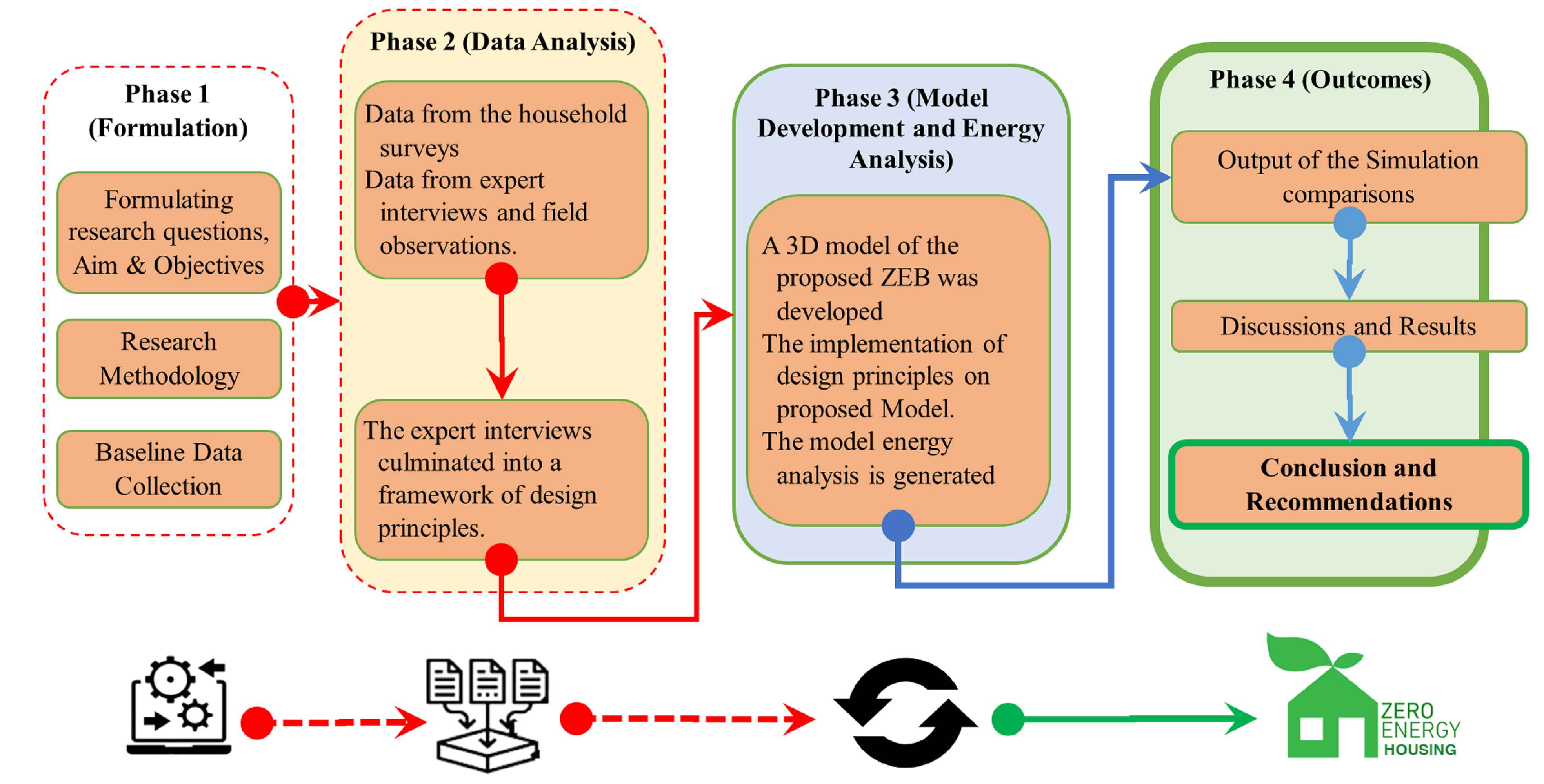
Fig. 2. General Methodological approach of the study.
4.1. Phase 1: preliminary research, scoping, and baseline data collection
This foundational phase established the research framework and gathered the initial data required to inform subsequent modeling and analysis. The phase was structured into two key activities: a comprehensive literature review and primary data collection.
Literature Review and Scoping: A systematic literature review was conducted to establish the theoretical foundation for the study. This review clarified core concepts related to ZEBs, EE, and sustainable housing, and analyzed international case studies to identify globally successful yet adaptable strategies. A critical outcome of this review was the definitive identification of a research gap concerning the application of ZEB principles in the specific socio-economic, cultural, and climatic context of AFG, thereby justifying the present study's focus.
Primary Data Collection: To ground the research in local realities, primary data were collected directly within Ghazni Province through a mixed-methods approach:
- Household Surveys: Structured questionnaires were administered across a statistically significant sample of 300 households spanning the main residential areas of Ghazni. These surveys were designed to quantitatively capture data on existing conditions, including household energy consumption patterns, prevalent construction materials, ventilation practices, lighting systems, and the state of thermal insulation.
- Expert Interviews: Semi-structured interviews were conducted with a diverse cohort of 23 local specialists, including architects, urban planners, engineers, renewable energy experts, private construction firm representatives, municipal managers, and university professors. The purposive selection of these experts ensured the inclusion of a wide range of professional expertise and deep familiarity with local conditions. These interviews provided rich, qualitative insights into practical challenges, regulatory landscapes, and perceived opportunities for energy retrofits. Critically, expert feedback on local material availability, cost thresholds, cultural acceptance of technologies, and typical construction practices provided the foundational socio-technical constraints that directly shaped the parametric variables (e.g., material choices, WWR ranges, technology options) for the subsequent simulation phase.
4.2. Phase 2: data analysis
The collected data (Quantitative and Qualitative) were analyzed using an integrated mixed-methods approach, as following:
- Quantitative Analysis: Data from the household surveys were analyzed using SPSS software. Descriptive statistics, including percentages and frequency distributions, were generated and visualized using graphs to identify trends and patterns in energy consumption and building characteristics.
- Qualitative Analysis: A systematic qualitative analysis was conducted on the data from expert interviews and field observations. The process, detailed in 3, followed a rigorous five-stage protocol to ensure validity and reliability.
In Fig. 3, The interview methodology described and consisted of the following stages:
- Objective Setting and Participant Selection: Defining the interview's purpose and selecting participants through purposive sampling based on their expertise.
- Scheduling: Coordinating times and locations (or online platforms) convenient for the participants.
- Interview Execution and Ethics: Conducting interviews professionally after obtaining informed consent, ensuring confidentiality, and audio-recording sessions for accuracy.
- Transcription and Coding: Transcribing the audio recordings verbatim. A total of 23 interviews were conducted; after discarding 3 due to incomplete responses, 20 were used for analysis, achieving data saturation [46,47]. The transcripts were then coded to identify recurring themes and key concepts.
- Thematic Analysis: Analyzing the coded data to draw meaningful conclusions that inform the retrofit model.
Figure 3
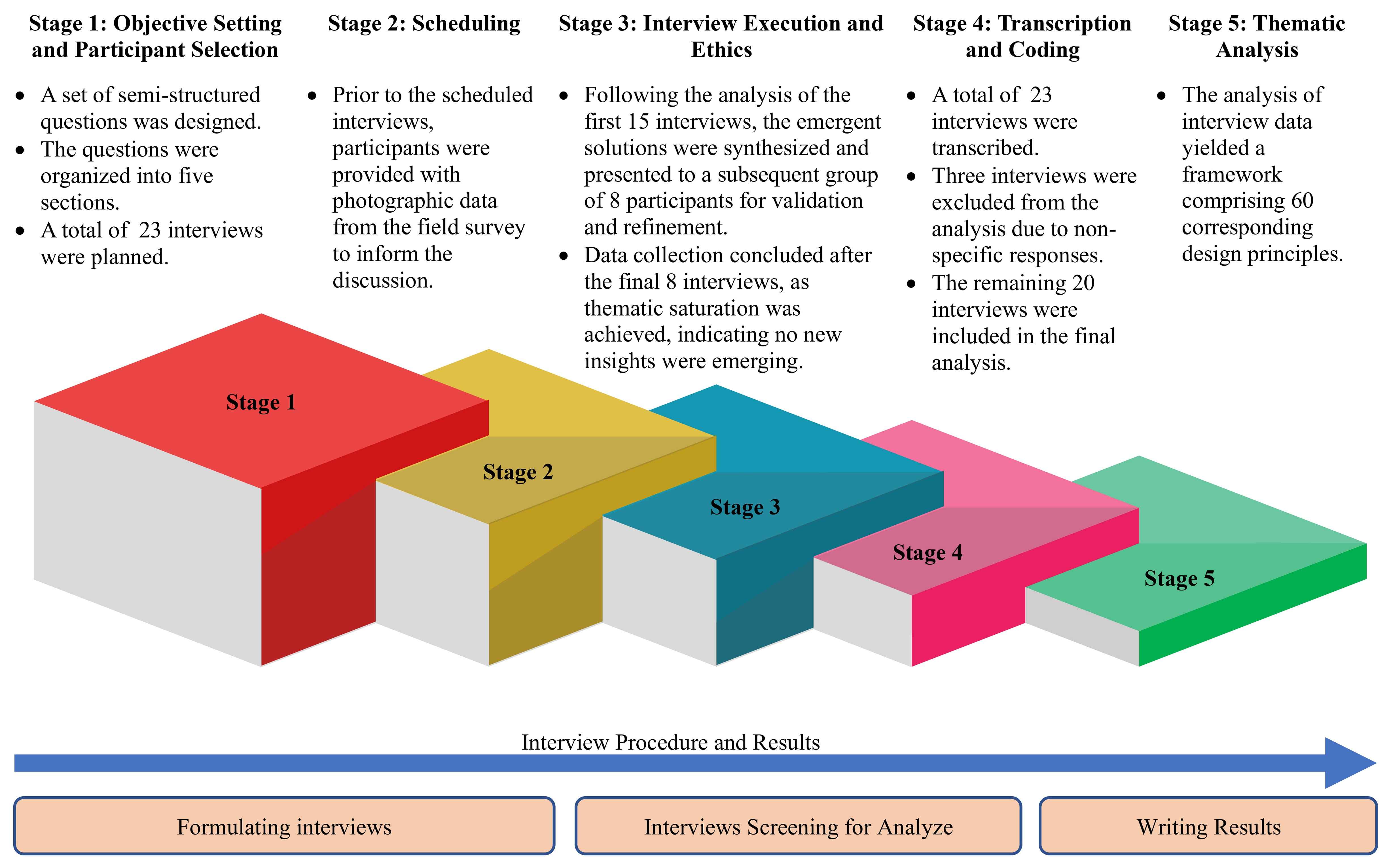
Fig. 3. Flowchart of the Qualitative Interview Methodology.
4.2.1. Derivation of simulation input parameters
To ensure the energy models reflected local usage patterns, key internal load and operational assumptions were derived quantitatively from the household survey data. Occupancy density was calculated based on the average reported household size. Lighting and equipment power densities (W/m ) were estimated from the reported types and prevalence of appliances (e.g., lights, fans, televisions).
Operational schedules for heating setpoints, cooling appliance use, lighting, and miscellaneous equipment were developed by analyzing survey responses regarding typical daily routines and seasonal practices. These derived parameters replaced the default assumptions in the EnergyPlus engine, ensuring the baseline and proposed models operated under consistent, context-specific conditions reflective of Ghazni households.
The synthesis of findings from the literature review, household surveys, and expert interviews culminated in a consolidated framework of design principles and socio-technical constraints. This framework, which explicitly integrated qualitative insights on feasibility with quantitative data on performance, served as the direct foundational input for developing the parametric building models and defining the realistic bounds for optimization parameters in Phase 3.
4.3. Phase 3: model development and energy analysis
Based on the synthesized findings from the interviews, a conceptual model for a ZEB was developed. This phase involved:
- Building Modelling: A 2D and 3D model of the proposed ZEB was designed using AutoCAD and Revit software including Add-Ins.
- Implementation of Design Principles: The established design principles were applied to the proposed model.
- Energy Analysis: An annual building energy simulation was conducted directly within Revit using the built-in Energy Optimization tool. This process evaluated the performance of various design options and quantified their energy savings.
This phase translated the synthesized findings from Phases 1 and 2 into a quantifiable, parametric building model. The design of the Proposed ZEB Model (Section 4.3.2) and the strategic optimization of parameters like WWR (Section 4.3.3) were not arbitrary but were directly guided by the integrated framework from Phase 2. For example, expert input on the high cost and maintenance concerns of complex mechanical systems steered the optimization towards passive and fabric-first solutions. The analysis was conducted using a project located in the “Nai Qala” area of Ghazni Province, AFG (33.300045 N, 67.835854 E). Site-specific climatic data, including solar radiation, temperature, and wind patterns, were integrated into the model using Revit's Internet Mapping Service, with data sourced from a nearby weather station (0.23 km away) to ensure simulation accuracy.
4.3.1. Simulation framework and parametric analysis
The energy analysis employed a parametric methodology using Autodesk Revit (BIM) with the Insight plugin and the Energy Optimization tool, which leverages the EnergyPlus engine (Version 23.1.0). An annual building energy simulation was conducted for the calendar year 2025 to evaluate both a traditional building typology and a proposed ZEB prototype against a comprehensive set of performance metrics, including EUI, carbon footprint, and potential for PV energy generation. The operational profiles for occupancy, lighting, equipment, and thermostat setpoints for both models were based on the parameters derived from the household survey data (Section 4.2.1), ensuring a locally representative assessment of energy use.
4.3.2. Building model specifications
Two distinct digital models were developed and analyzed:
- Traditional Building Model: This model represents the prevalent construction practices in Ghazni, characterized by minimal, non-insulated materials that result in poor thermal performance. Key elements include 25 cm weak masonry walls without insulation, an 18 cm uninsulated concrete roof slab, and single-glazed windows with metal frames, all of which contribute to significant undesired heat transfer.
- Proposed ZEB Model: This model was developed by applying the design principles derived from the earlier phases. It is designed for high thermal efficiency using an optimized material palette. Key interventions include walls with Exterior Insulation and Finish System (EIFS) and compressed earth blocks for thermal mass, an intensive green roof system for natural insulation and reduced heat gain, and triple-glazed windows with PVC frames to minimize thermal bridging (Table 1).
Table 1
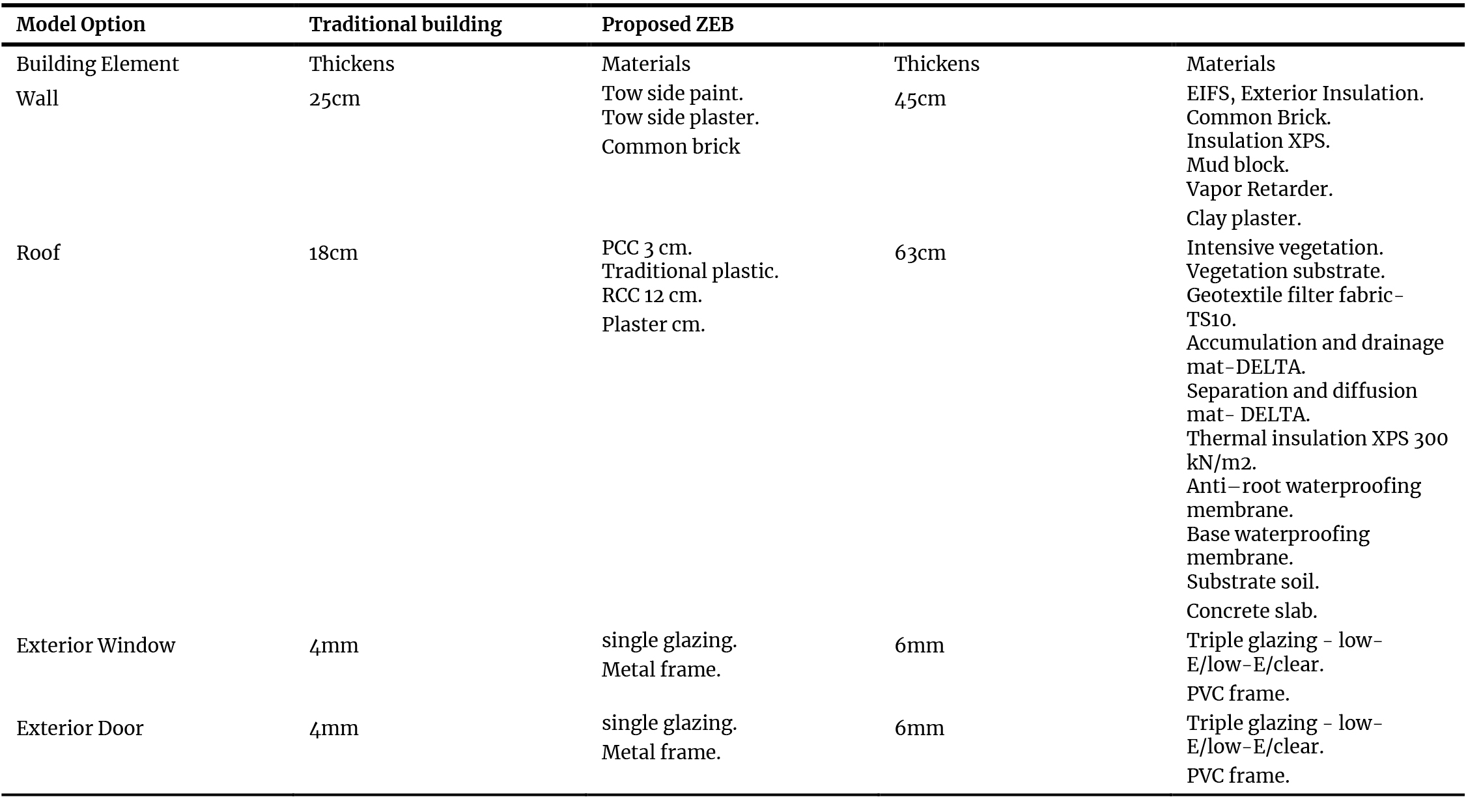
Table 1. Building element specifications for the traditional and proposed models used in the energy simulation.
4.3.3. Optimization of building envelope: WWR
A critical focus of the parametric analysis was the optimization of the building envelope, particularly the WWR. The proposed model demonstrates a strategic and climatically responsive design compared to the traditional model. Overall, the total window area was reduced by 40.76 (from 142.41 m to 84.37 m ), and the Gross WWR was lowered from 26.01 to 18.40 , a reduction of 29.26 . More importantly, the proposed design strategically rebalances this ratio per orientation. For instance, it drastically reduces the East facade WWR from 22.16 to 10.54 to minimize morning heat gain, while strategically maintaining a high South facade WWR of 48.33 to maximize beneficial solar heat gain in winter (Table 2).
Table 2
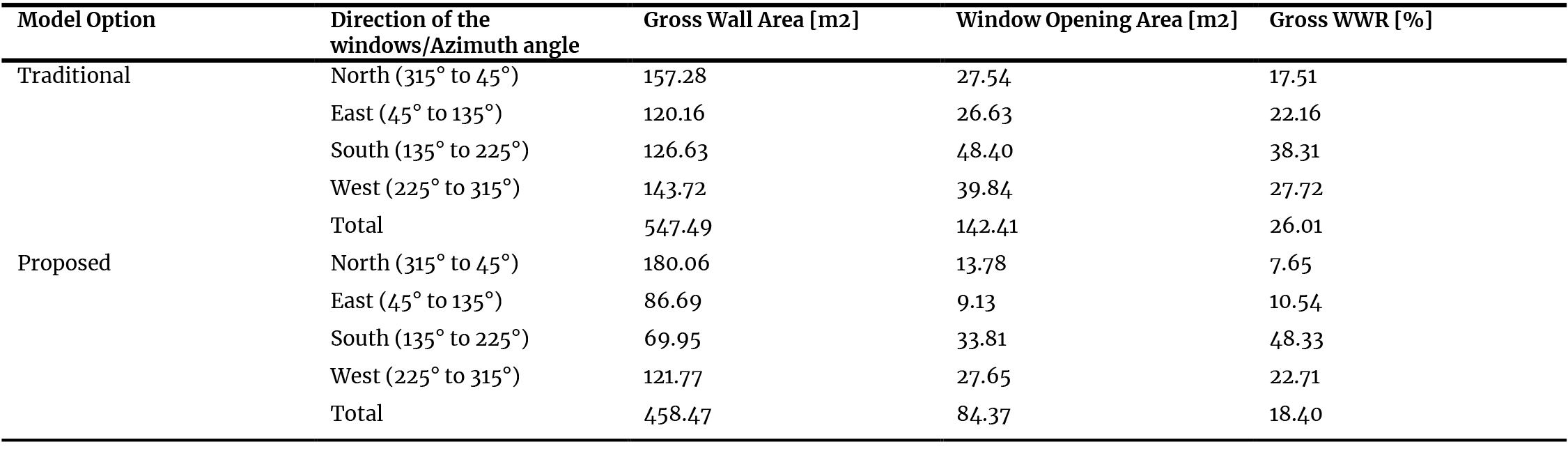
Table 2. WWR analysis by orientation for the traditional and proposed models.
4.3.4. Synthesis and visual representation of models
The culmination of the parametric design and specification process resulted in two fully developed energy analysis models. The traditional model reflects the existing, inefficient building stock, while the proposed model embodies the integrated, climate-responsive design principles derived from this study. Digital prototypes of both the traditional and proposed building models were generated, as visually summarized in Fig. 4. These models served as the basis for the comparative energy simulation, the results of which are presented and discussed in Phase 4.
Figure 4
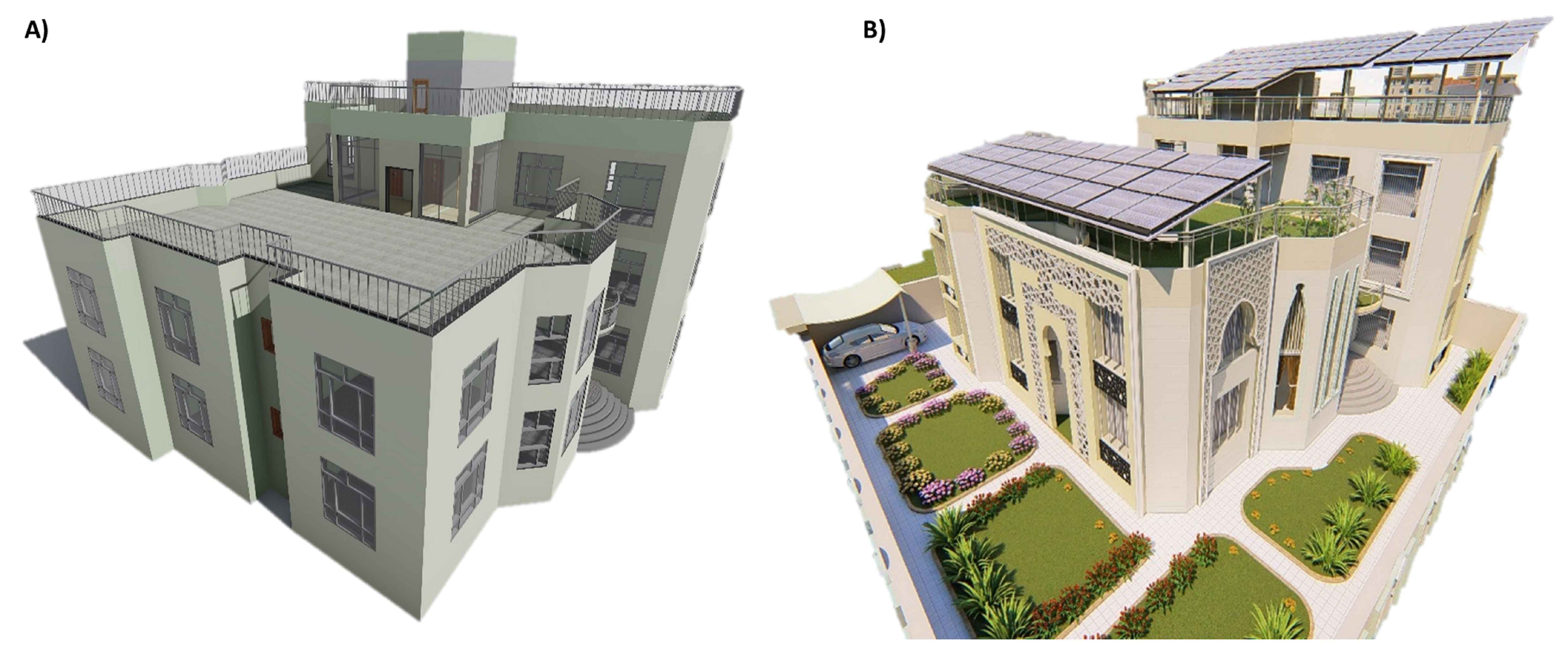
Fig. 4. Energy analysis models: (A) Traditional building typology; (B) Proposed ZEB prototype.
4.4. Phase 4: analysis outcome through models’ simulation
The final phase involved a comparative analysis of the simulation outputs for the traditional and proposed building models. The quantitative results, including annual EUI, carbon footprint, and potential PV energy generation, were systematically compared to quantify the performance improvement of the proposed retrofit model. This comparative dataset forms the primary evidence base for the subsequent Results section, where the findings are presented, and the discussion section, where they are interpreted in the context of the study's aim and the broader literature on ZEH in AFG.
4.5. Methodological considerations and limitations
The reliability of the simulation results is grounded in the use of the validated EnergyPlus calculation engine within the industry-standard software. While the simulation engine itself is validated against empirical data and standards [48-50], and validated according to established testing protocols [38,51,52], our specific building models were calibrated using localized input parameters: Ghazni's specific climatic data, precise geographical coordinates, measured material properties, and the internally derived occupancy and load parameters (Section 4.2.1). It is important to note that a full empirical calibration of the model outputs against measured utility data from an identical existing building was not feasible due to the absence of sub-metered historical energy data for the specific case-study typology in Ghazni. The analysis operated under standard simulation assumptions, including international CIE clear sky conditions and default surface reflectance’s, which, while necessary for a controlled comparative analysis, acknowledge a limitation regarding real-world variability. Therefore, the results are presented with high confidence as a robust, relative performance comparison between the traditional and proposed typologies under identical conditions, rather than as an absolute prediction of energy consumption for any specific household.
However, several considerations and inherent limitations are acknowledged to provide proper context for interpreting the results. First, the energy simulations, while using localized climate data and material properties, operate under standardized assumptions for internal loads, occupant schedules, and HVAC setpoints, as defined by the EnergyPlus engine. These may not fully capture the behavioral diversity observed in the household surveys. Second, the accuracy of the baseline model depends on the self-reported data from household surveys, which can be subject to recall or estimation bias. Third, while the expert sample was purposively selected for diversity and data saturation was achieved, the findings are indicative of professional perspectives within Ghazni and may not encompass all stakeholder views.
These limitations are directly addressed by the study's core objective and comparative design. The primary aim is not to predict absolute energy consumption for a specific household but to provide a rigorous comparative analysis between a traditional typology and a proposed retrofit model under identical simulation conditions. The parametric approach allows us to isolate and evaluate the performance impact of specific design interventions. Furthermore, the integration of qualitative data grounds the simulation in local realities, enhancing the practical relevance of the optimized model. The results should therefore be interpreted as a robust demonstration of significant performance potential and a validated framework for decision-making, with the understanding that actual savings in a real-world deployment would require further calibration and monitoring.
5. Results and discussion
5.1. Analysis of household survey data
The household survey provides critical insights into the socio-technical context of residential energy use in Ghazni, revealing significant gaps in awareness, building practices, and energy consumption patterns that directly inform the need for a localized retrofit model.
A foundational finding is the profound lack of public awareness regarding ZEB principles. A striking 75.36 of respondents reported having no knowledge of ZEBs, with an additional 10.14 having only heard the term without understanding it [Fig. 5(a)]. This indicates that sustainable building concepts have not penetrated public discourse, establishing a primary barrier to adoption that must be addressed through awareness campaigns. This knowledge gap is mirrored in building practices. While 75.36 of homes use brick and cement, indicating a move towards standardized materials, the application of energy-efficient components remains low [Fig. 5(b)]. Only 10.14 of households have installed factory-grade thermal insulation, and 47.83 use none at all, with 27.54 unaware of what insulation entails [Fig. 5(a)]. This explains the widespread thermal inefficiency of the housing stock.
Figure 5
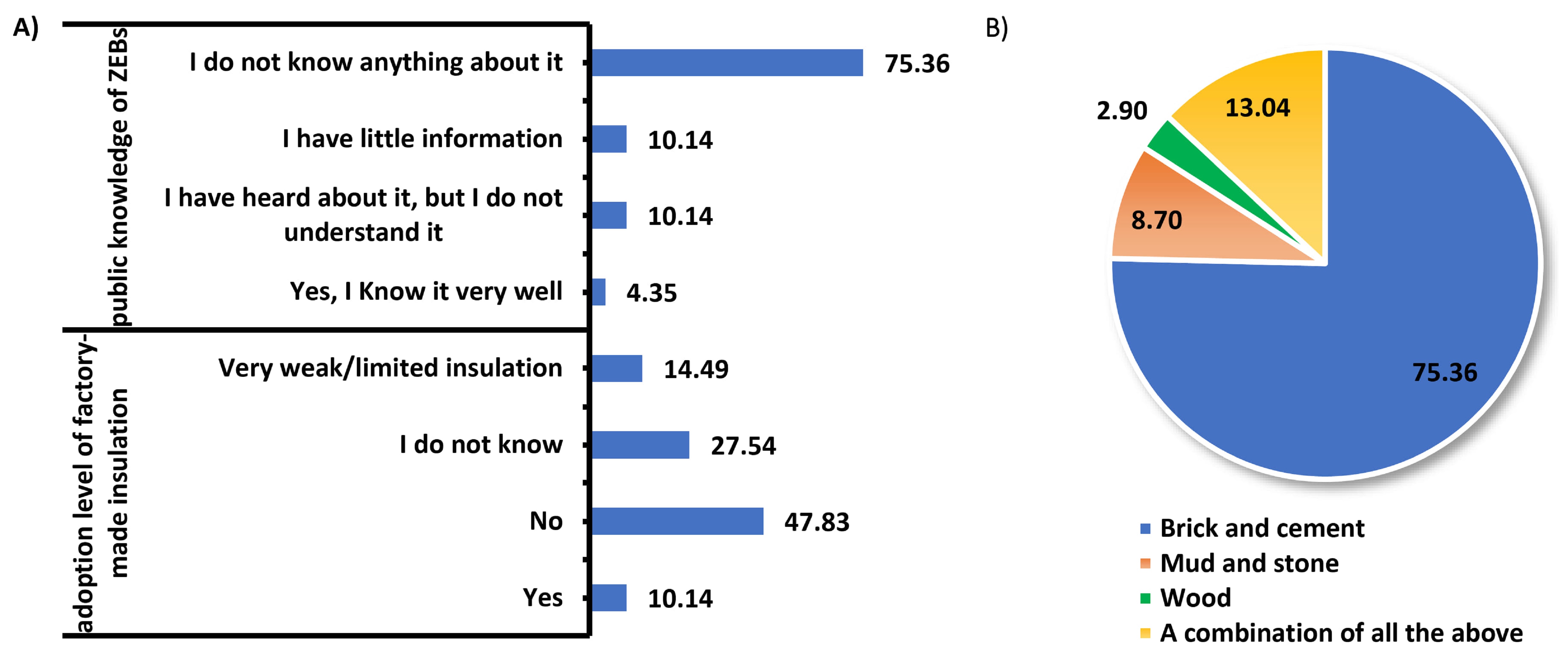
Fig. 5. Household survey results on building practices and awareness: (A) awareness and adoption of energy-efficient building practices, (B) primary construction materials used.
Energy consumption patterns and cost burdens further underscore the problem. For heating, 56.52 of households rely on gas or coal stoves, and 30.43 use wood stoves, highlighting a dependence on traditional, inefficient, and polluting fuels [Fig. 6(a)]. For cooling, 69.57 use electric fans, a less energy-intensive but passive solution (Fig. 6A). Critically, these practices contribute to significant financial strain. Furthermore, 40.58 of households reported monthly electricity bills between 7 to 14 USD [approx. 500-1000 Afghani (AFN)] [Fig. 6(b)]. This widespread financial burden is a powerful motivator for change.
Figure 6
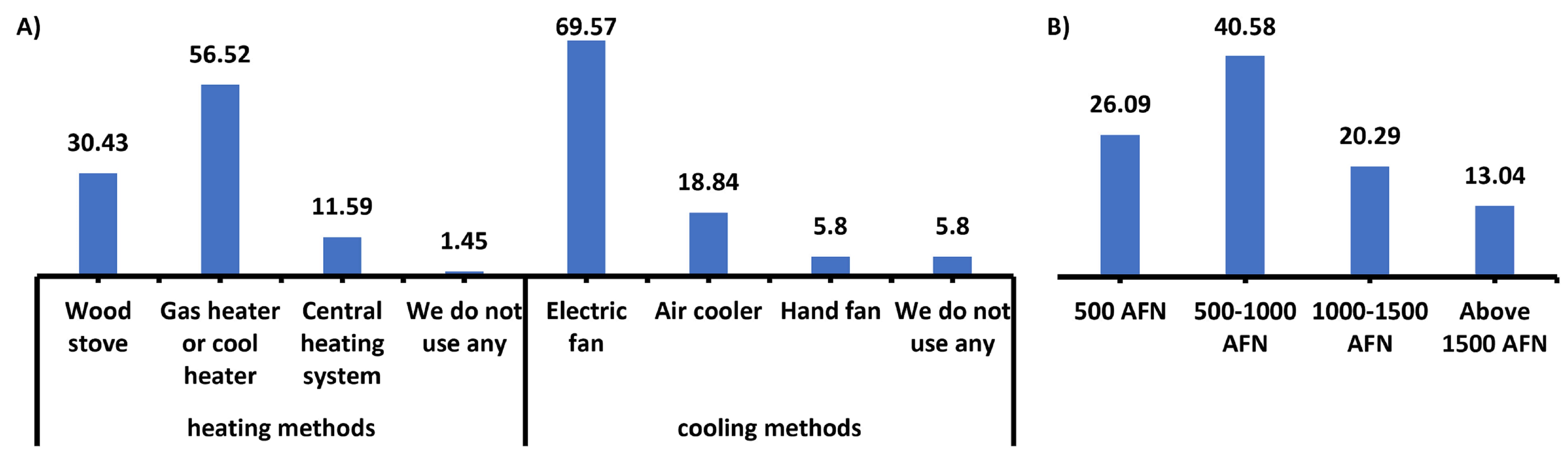
Fig. 6. Key findings from the household survey on energy practices and costs: (A) primary heating and cooling methods, (B) monthly electricity bill amounts.
Despite these challenges, the survey reveals a strong latent potential for adopting energy-efficient solutions. While the government grid remains the primary energy source for 69.57 of households [Fig. 7(a)], there is notable openness to alternative technologies. As shown in Fig. 7A, a significant 23.19 of households already use solar energy, and 56.52% have installed PVC windows [Fig. 7(b)]. Survey data reveals that 43.48 of respondents registered a complaint about high energy costs, while an additional 37.68 reported a very high level of complaint; the sum of these two groups constitutes 81.16 of the sample who experience notable economic pressure [Fig. 7(c)]. Furthermore, 53.62 of respondents expressed readiness to adopt energy-saving alternatives [Fig. 7(c)]. Perceived benefits of ZEBs are also recognized, with 30.43 valuing environmental protection, 24.64 valuing reduced consumption, and 23.19 valuing improved living comfort [Fig. 7(a)]. However, 21.74 still see no value in ZEBs, indicating a persistent segment requiring targeted communication [Fig. 7(a)].
Figure 7
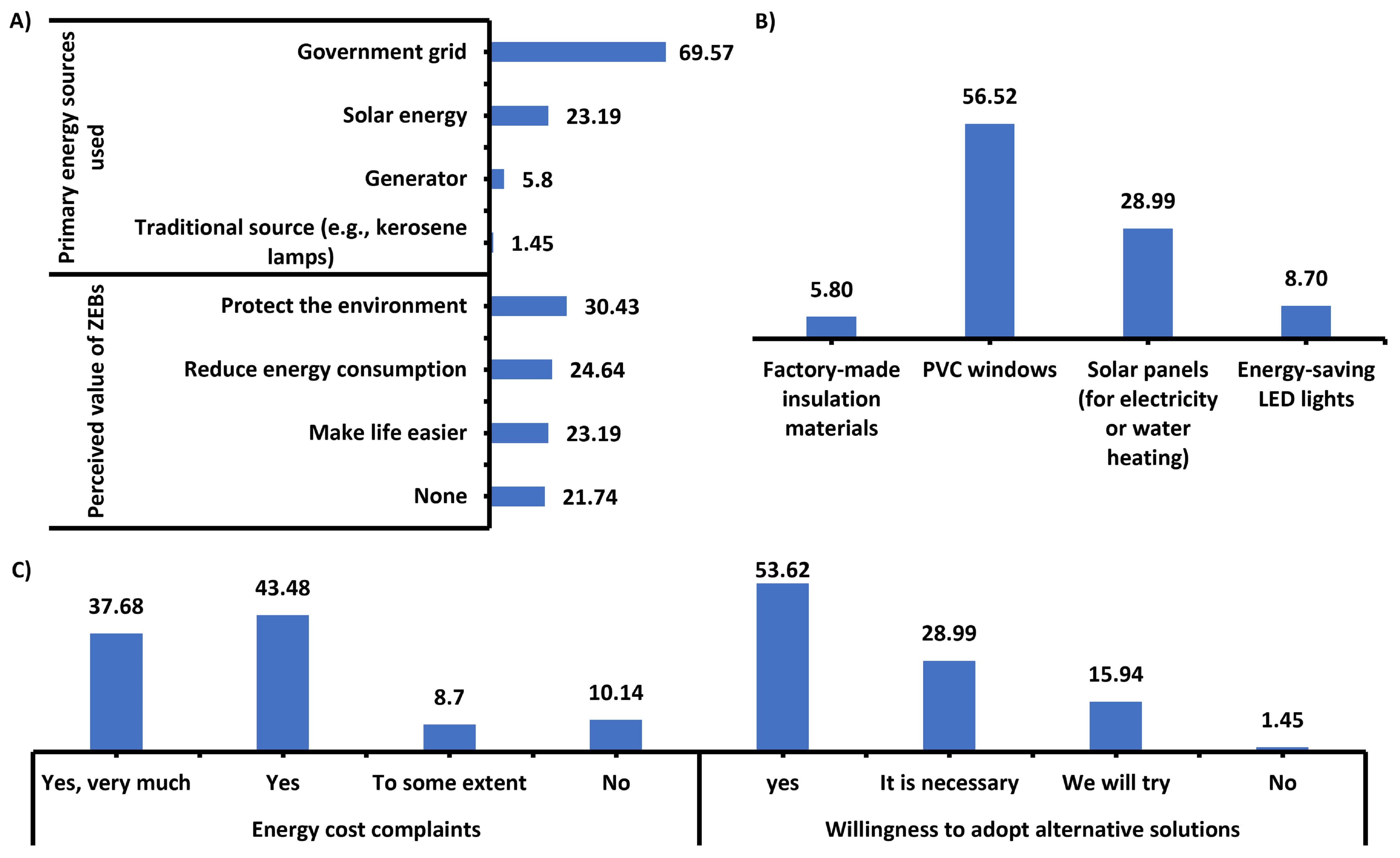
Fig. 7. Household survey results on energy sources and attitudes: (A) energy source diversity and recognized ZEB benefits, (B) use of energy-efficient technologies, (C) perceived economic burden and openness to energy-saving solutions.
In conclusion, the survey data paints a clear picture: Ghazni's residential sector is characterized by low technical knowledge, inefficient building envelopes, reliance on traditional fuels, and high energy costs, which collectively create a substantial performance gap. However, the concurrent presence of existing solar adoption, a willingness to change, and recognition of ZEB benefits provides a crucial foundation of social acceptance upon which a technically sound, localized retrofit model can be successfully built and promoted.
5.2. Synthesis of expert interviews and development of a localized design framework
The thematic analysis of expert interviews was conducted not merely to complement but to critically interpret the quantitative survey data, translating identified problems, such as high energy costs, low technical awareness, and material constraints, into actionable socio-technical strategies. The resulting four-pillar framework (Fig. 8) therefore operates as a translational mechanism, bridging the gap between quantified local constraints (Section 5.1) and globally-derived technical principles (Section 2). In-depth qualitative interviews were conducted with 23 local specialists, including architects, engineers, urban planners, municipal managers, and academics. A thematic analysis of these interviews was performed to identify consensus views, critical challenges, and actionable strategies for implementing ZEB principles in Ghazni. The analysis culminated in a consolidated Localized Design Framework for Ghazni, which translates global ZEB knowledge into context-specific, actionable principles.
Figure 8
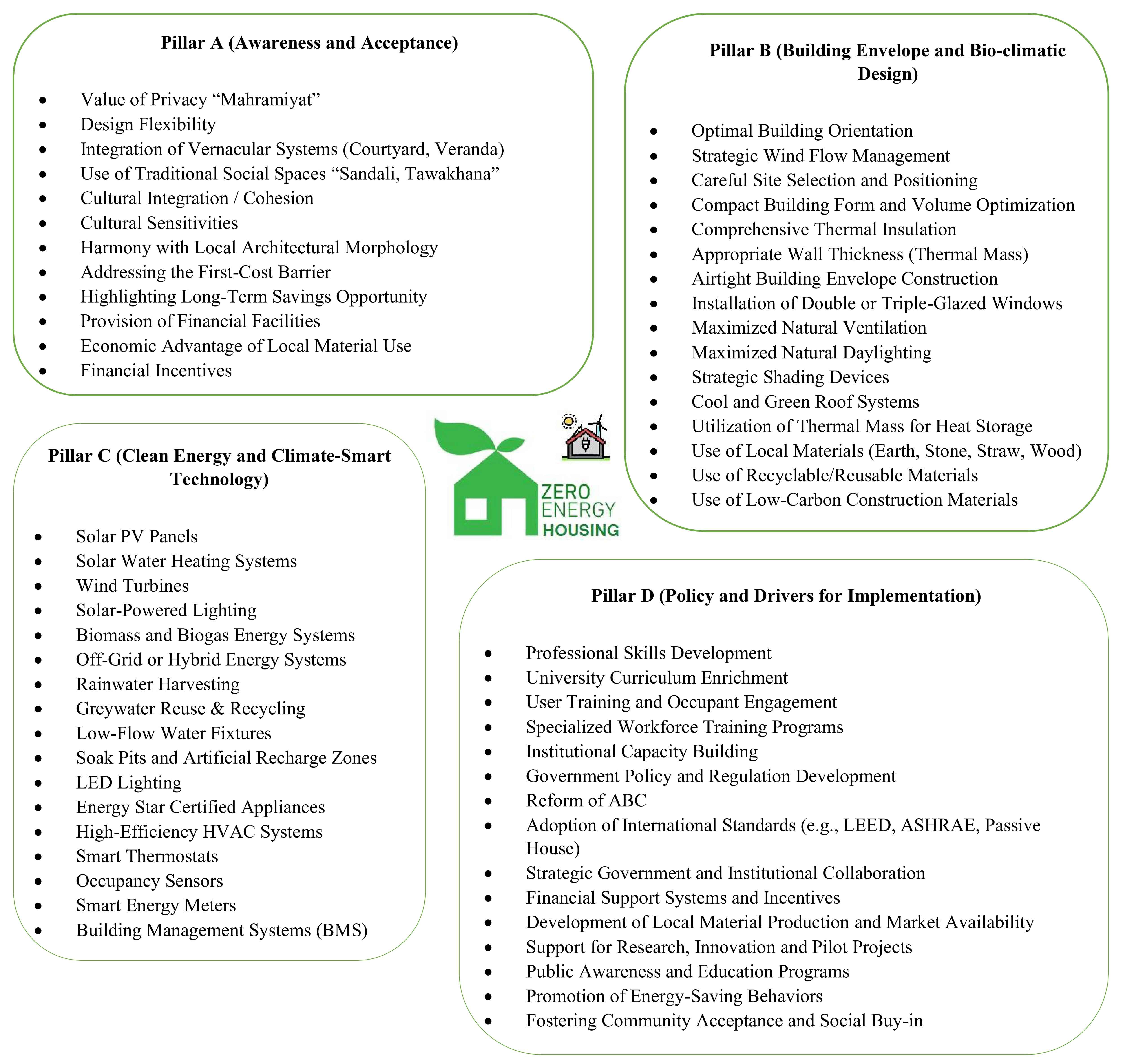
Fig. 8. The four-pillar localized design framework for ZEH in Ghazni, derived from thematic analysis of 20 expert interviews.
The framework is built upon four foundational pillars (A-B-C-D), synthesized from expert consensus. Pillar A (Awareness and Acceptance) addresses the critical socio-cultural dimension. Experts unanimously identified a severe public awareness deficit as the primary barrier, with over 75 of the general population unaware of ZEB concepts [(as quantified in Fig. 5(a)]. Therefore, the framework prioritizes community engagement, targeted education campaigns, and the demonstration of pilot projects to build social acceptance and illustrate the tangible economic benefits of reduced energy bills.
Pillar B (Building Envelope and Bio-climatic Design) forms the technical core, emphasizing passive survivability tailored to Ghazni's climate. Experts strongly advocated for a "fabric-first" approach. Key prescribed principles include: optimal southern orientation for winter solar gain; strategic shading (e.g., reinterpreting traditional elements like Veranda) for summer cooling; the use of high thermal mass and locally-sourced insulation materials (e.g., improved earth blocks); and airtight construction to minimize infiltration heat losses.
Pillar C (Clean Energy and Climate-Smart Technology) focuses on meeting residual energy needs sustainably. Experts highlighted Ghazni's exceptional solar potential, recommending the phased integration of solar PV panels and solar water heaters as the most viable renewable source. This is to be coupled with the adoption of super-efficient appliances (e.g., LED lighting) and simple smart controls to manage the drastically reduced energy load effectively.
Finally, Pillar D (Policy and Drivers for Implementation) addresses systemic enablers. Experts cited the lack of enforceable EE standards in the Afghan Building Code (ABC) and financial mechanisms as major implementation gaps. The framework, therefore, proposes urgent amendments to the national building code, the development of targeted financial incentives (e.g., microloans for retrofits), and the establishment of training programs for local builders to build essential technical capacity.
This synthesized four-pillar framework, presented conceptually in Fig. 8, serves as the foundational logic model for the study. It directly informed the material specifications, the optimization of the WWR, and the system choices for the proposed ZEB prototype analyzed in the subsequent energy simulation. By integrating socio-cultural acceptance, bioclimatic design, renewable technology, and policy drivers, the framework ensures the proposed retrofit model is not only high-performing but also culturally appropriate, economically viable, and supported by a clear roadmap for implementation in Ghazni.
The thematic analysis of expert interviews produced a localized four-pillar design framework, synthesizing 60 context-specific principles into the interconnected categories of Awareness and Acceptance (A), Building Envelope and Bio-climatic Design (B), Clean Energy and Technology (C), and Policy and Implementation Drivers (D). To quantify the impact of this framework, it was operationalized in a digital modelling environment. A proposed ZEB prototype was developed in Autodesk Revit by systematically applying these principles to inform its bioclimatic orientation, high-performance envelope, and integrated systems. A parametric model representing the prevailing traditional building typology was developed concurrently as a performance baseline. Both models were calibrated with local Ghazni climatic data. An annual energy simulation was then executed for both models using the EnergyPlus engine, generating a comparative dataset of key performance indicators, including EUI, carbon emissions, and renewable energy potential. This quantitative output, which forms the core results of this study, directly measures the performance gap between the existing housing stock and the framework-informed retrofit model.
5.3. Comparative energy simulation: traditional vs. proposed ZEB model results
The annual energy simulation, executed for the traditional baseline and the proposed framework-informed ZEB prototype, provides a quantitative assessment of the performance gap. The results are analyzed across three key performance metrics: EUI, carbon footprint, and PV energy generation potential.
5.3.1. Energy use intensity (EUI) and end-use analysis
The proposed ZEB model demonstrates a substantial reduction in total energy demand. The annual EUI decreased by approximately 33 , from 432.54 kWh/m for the traditional model to 290.31 kWh/m for the proposed prototype (Fig. 9). This overall saving is driven by significant reductions in specific end-uses. Space heating demand was reduced by 64.4 (from 120425 kWh to 42919 kWh), and space cooling demand decreased by 27.9 (from 96950 kWh to 69900 kWh) (Table 3). These savings are directly attributable to the implementation of Pillar B principles: the high-performance envelope with enhanced insulation and airtightness minimizes thermal transmission, while the strategic rebalancing of the WWR optimizes solar gain and reduces unwanted heat gain. The 64.4 reduction in space heating demand is a direct validation of Pillar B's (Building Envelope) emphasis on super-insulation and airtightness for Ghazni's cold winters.
Figure 9
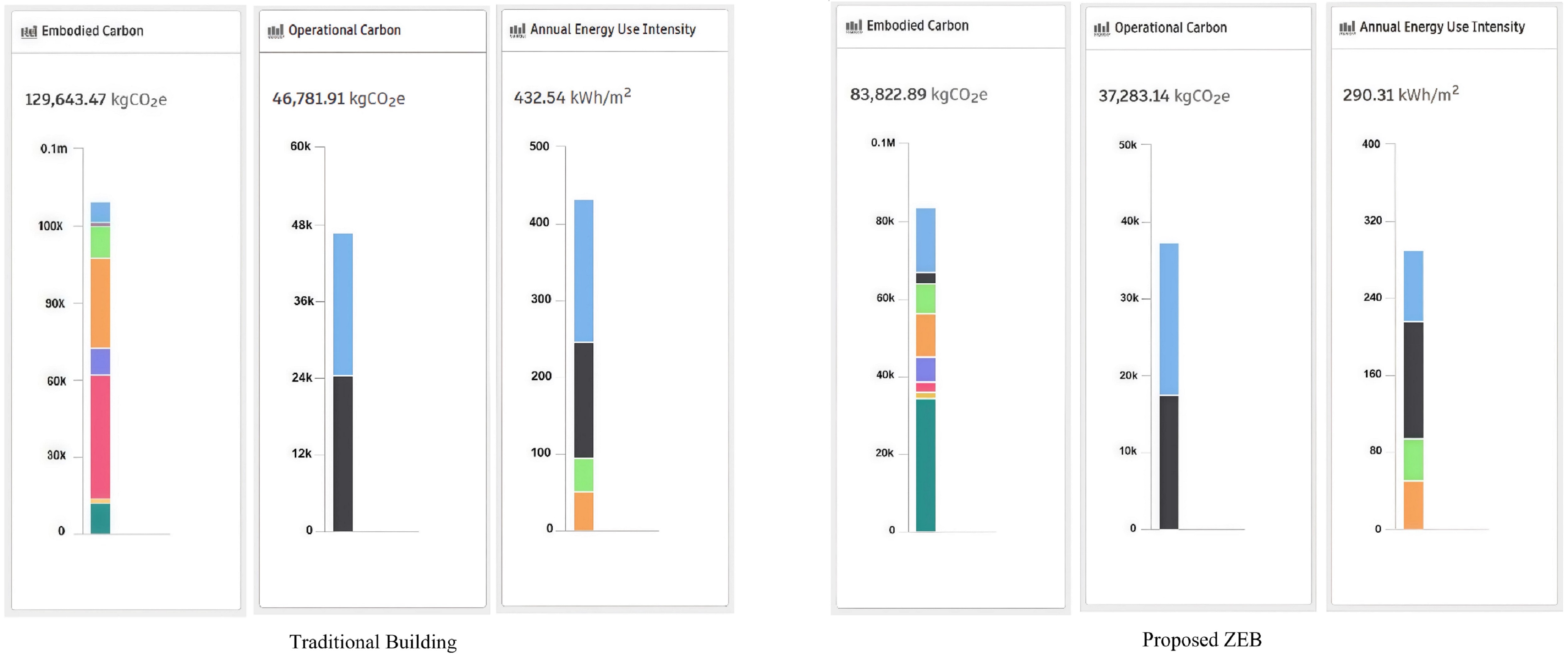
Fig. 9. Comparative Embodied and Operational Carbon Footprint.
Table 3

Table 3. Comparative annual energy end-use consumption and EUI.
The more modest 27.9 cooling reduction underscores the framework's correct prioritization of summer heat gain mitigation through strategic WWR rebalancing and shading, as per expert consensus.
5.3.2. Embodied and operational carbon footprint
The improvement in energy efficiency directly translates to a lower environmental impact across the building's lifecycle. While the operational carbon emissions associated with building energy use were reduced by 20 (from 46781.91 annually for the traditional model to 37283.14 for the proposed ZEB), a comprehensive assessment must also consider embodied carbon. The material production and construction phases of the proposed ZEB account for an estimated 83822.89 , which is significantly lower than the 129643.47 estimated for the traditional building. This substantial reduction in upfront embodied emissions, combined with the lower operational footprint, underscores the dual, lifecycle-wide benefit of the proposed model: it lowers long-term household energy costs while simultaneously mitigating total GHG emissions, a core objective of Pillar C (Clean Energy & Technology). These findings demonstrate that the proposed design not only saves energy but also significantly reduces the total environmental impact, confirming it is well-adapted to the climatic and economic conditions of Ghazni Province and advances credibly toward the ZEB target.
5.3.3. Renewable energy generation and net-zero potential
To achieve the zero-energy target, the reduced energy demand must be met by on-site renewable generation. A solar PV analysis for the proposed model was conducted using Revit, with panel orientation set to an altitude of 78 and a 12 tilt for optimal solar exposure in Ghazni. The analysis determined an annual solar irradiation of approximately 218 kWh/m (Fig. 10). Consequently, installing 254 m of PV panels was calculated to generate approximately 55012 kWh annually. Given the proposed building's total annual energy consumption of 53719 kWh (comprising 24794 kWh for interior lighting and 28925 kWh for interior equipment, as detailed in Table 3), this results in a net positive energy balance of ~1293 kWh per year (Fig. 11). This establishes a complete balance between annual consumption and production, confirming that the building can fully meet the Net Zero Energy Building (NZEB) standard. The surplus energy can be used to meet additional power needs or be fed back into the grid.
Figure 10
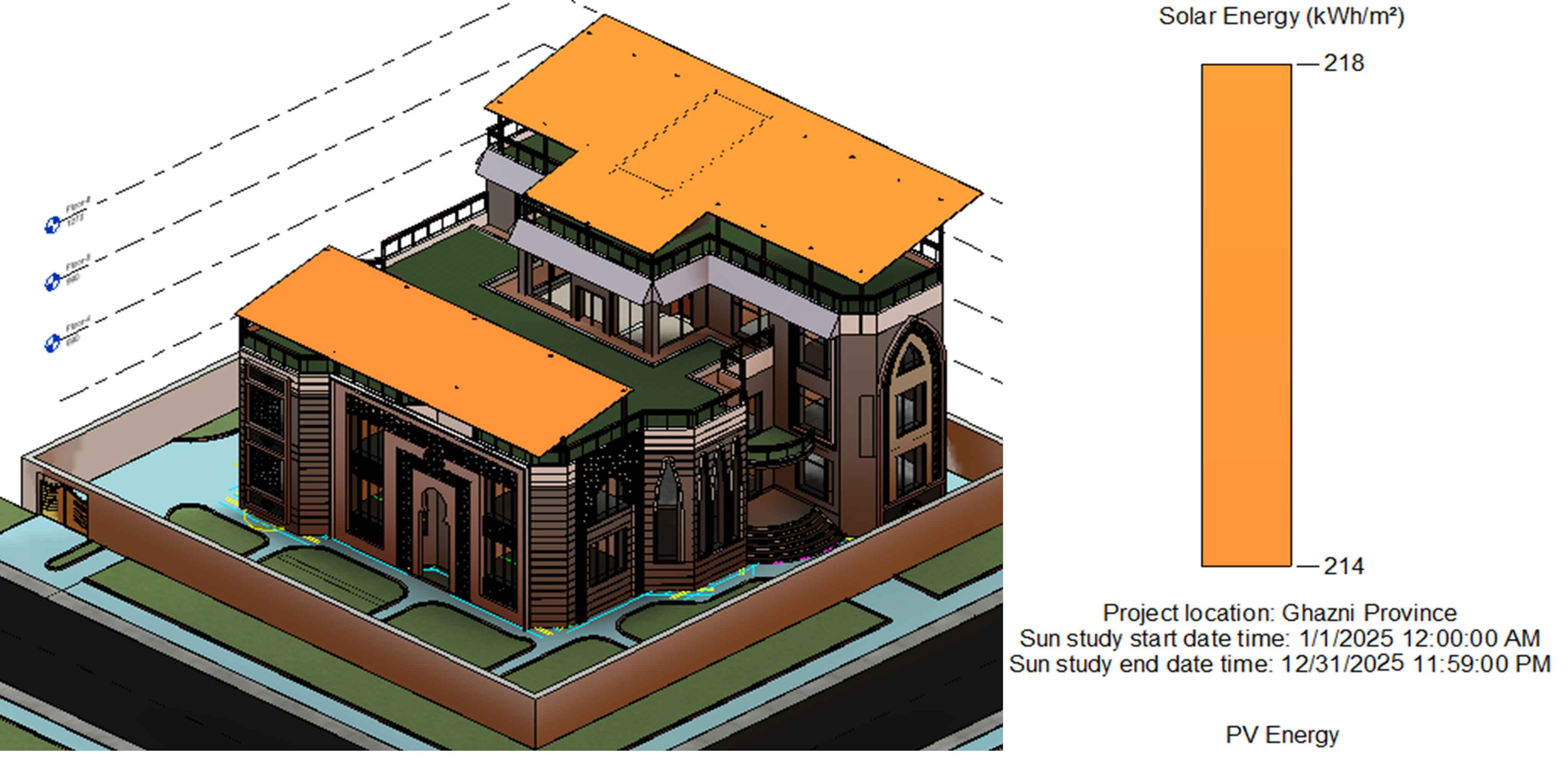
Fig. 10. Annual solar radiation and PV energy potential at the project site in Ghazni Province, indicating conditions favorable for NZEB performance.
Figure 11
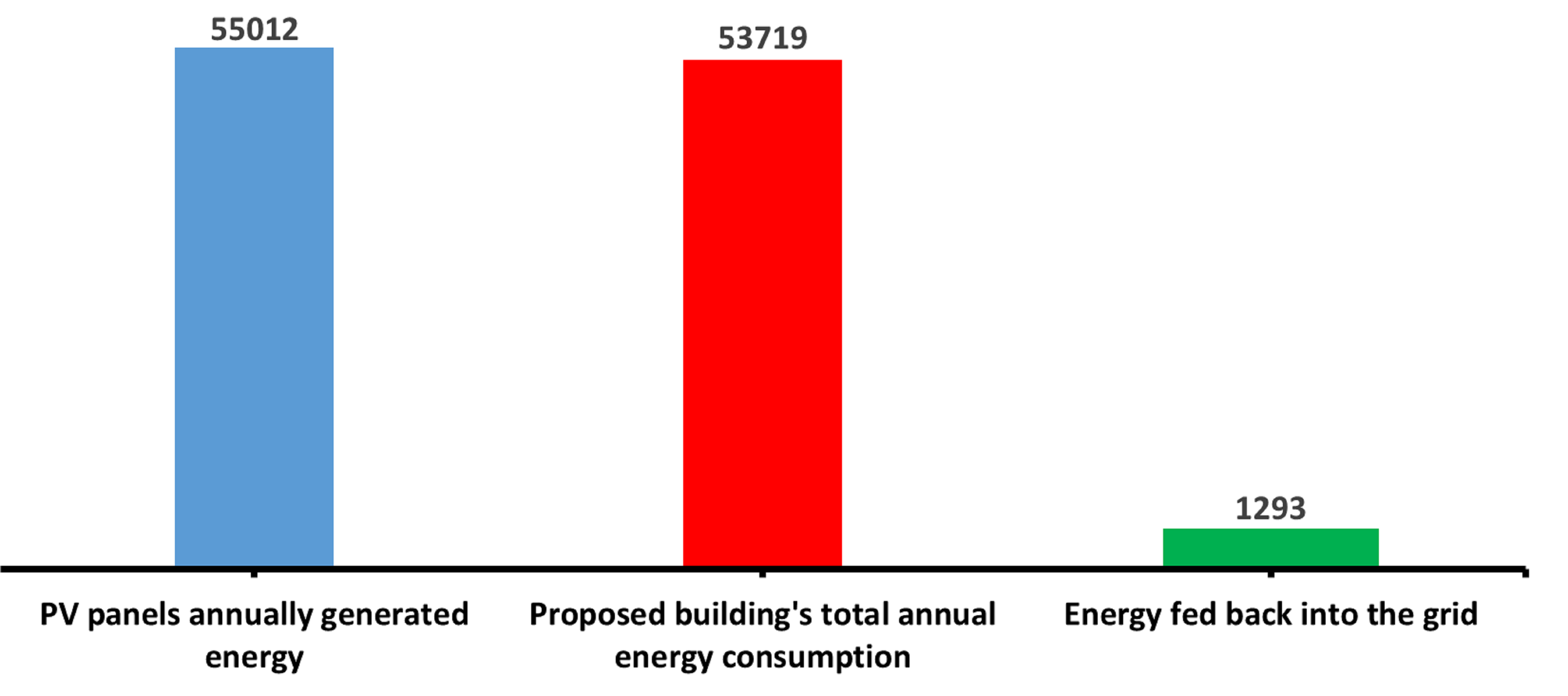
Fig. 11. Annual energy balance of the proposed ZEB, showing surplus PV generation over building consumption, with excess energy fed to the grid.
This achievement validates Pillar C's (Clean Energy) focus on Ghazni's high solar potential. An initial economic assessment, however, contextualizes this technical success within the local financial constraints identified in Pillar A (Awareness/Acceptance). Based on current local market estimates, the incremental cost of key retrofit measures, including enhanced insulation, triple-glazed windows, and the green roof, is approximately 30-40 higher than conventional construction. The added cost of the 254 m² PV system is significant. When combined with the estimated annual energy cost savings derived from the 33 EUI reduction and net-zero operation, a simple payback period for the integrated retrofit package is calculated to be approximately 13-15 years. This extended payback period explicitly quantifies the primary financial barrier to adoption and underscores the critical necessity of the tailored financial mechanisms (e.g., microloans, subsidies) proposed under Pillar D (Policy) to improve economic feasibility. Thus, the outcome demonstrates a technically viable pathway to NZEB status while highlighting that its practical implementation is contingent upon overcoming the upfront cost barrier through supportive financial instruments and policies.
5.4. Synthesis and implications: from localized findings to broader frameworks
This study successfully bridges the critical gap between global ZEB principles and the Afghan context by developing and empirically validating a localized, socio-technical retrofit framework for Ghazni. The research answers its primary question by demonstrating that a feasible model must synergistically address the identified tripartite gap: it fills the knowledge gap through the survey and simulation (Sections 5.1, 5.3), provides a methodological bridge via the four-pillar translational framework (Section 5.2), and proposes concrete measures to overcome the implementation gap.
The integrated results lead to several key analytical conclusions with broader implications. First, the significant 33 EUI reduction confirms that while technical optimization (Pillars B & C) is highly effective, its real-world viability is contingent upon the parallel social (Pillar A) and policy (Pillar D) strategies designed to overcome the awareness and cost barriers revealed in the survey. This reinforces socio-technical transition theory, which posits that sustainable innovation requires simultaneous adaptation in technology, user practices, and regulatory structures. Second, the divergent reduction in heating (64.4 ) versus cooling (27.9 ) loads provides a critical climate-specific insight. It validates the framework's emphasis on a bioclimatic, fabric-first approach (Pillar B) as the primary lever for Ghazni's continental climate, strategically prioritizing winter heat retention over active cooling, a nuance often absents from generic models. Third, while the net-zero operational potential achieved through integrated PV (Pillar C) demonstrates a path to energy sovereignty, the embodied carbon analysis introduces an essential lifecycle perspective. The 35 reduction (from 129643.47 kgCO₂e to 83822.89 kgCO₂e) in upfront emissions underscores that true sustainability in retrofit projects must encompass material production, extending the theoretical scope of ZEB assessments beyond operational energy.
In conclusion, while the performance alignments with studies from similar climates [22-24,53] confirm the universality of core physics, this study's contribution lies in its integrated, context-grounded validation. It moves beyond demonstrating that strategies work to explicating how and why they must be bundled to succeed in constrained, under-researched environments. The proposed framework thus serves as both a practical blueprint for Ghazni and a conceptual model for socio-technical retrofit planning in comparable regions. The primary challenge now is translational, requiring pilot projects to monitor the socio-technical performance gap between simulated potential and real-world adoption, the ultimate test for any localized framework.
6. Conclusion
This study has comprehensively investigated the current state of residential building energy performance in Ghazni, AFG, employing an integrated mixed-methods approach, combining household surveys, expert interviews, and comparative building energy simulation, to evaluate the feasibility of transitioning towards ZEH. The findings delineate a significant performance gap between the existing housing stock and contemporary EE standards, while concurrently demonstrating a viable, evidence-based pathway for transformative improvement.
Diagnostic survey results reveal a foundational challenge: a critical lack of public awareness of ZEH concepts, with over 75% of respondents possessing no knowledge. This is compounded by prevailing construction practices, where the vast majority of homes (89.86 ) lack formal thermal insulation and rely heavily on high-embodied energy materials like brick and cement (75.36 ), with minimal use of locally adapted, sustainable alternatives. Energy consumption patterns confirm a dependence on costly and inefficient sources, including traditional fuels for winter heating (56.52 ) and electricity for summer cooling.
In direct response to these identified challenges, the core contribution of this research is the development and validation of a targeted, four-pillar (Awareness, Building Envelope, Clean Energy, Policy) socio-technical framework for the Ghazni context. Simulation-based comparative analysis yielded transformative results. The proposed design, integrating enhanced thermal insulation, triple-glazed windows, a green roof, and optimal solar orientation, achieved a 64.4 reduction in heating demand and a 27.9 reduction in cooling demand. Consequently, the total EUI was reduced by approximately 33 , from 432.54 kWh/m to 290.31 kWh/m , driving an associated ~20 reduction in annual operational carbon emissions.
Crucially, this study advances the discourse by incorporating a lifecycle carbon perspective. The proposed design demonstrates a 35% reduction in embodied carbon (from 129643.47 to 83822.89 ) compared to the conventional model, highlighting that sustainability gains extend beyond operational energy to the construction phase itself. Most decisively, the integration of a rooftop solar PV system, with an estimated annual generation of 55012 kWh, exceeds the building's annual energy demand of 53719 kWh, achieving a net-zero operational energy balance and placing it within the ZEH category. An associated economic analysis estimates the payback period for the comprehensive retrofit at 13-15 years, quantifying the upfront financial challenge.
This proves that a synergistic combination of climate-responsive passive design, strategic material selection, and active renewable energy generation can eliminate operational energy costs, reduce lifecycle environmental impact, and enhance energy security, even within AFG's challenging socio-economic and infrastructural context. The research thus provides not only a technical validation but also a holistic, scalable blueprint for sustainable housing in Ghazni and similar regions. The imperative now shifts to addressing the identified implementation barriers, cost, policy, and awareness, to translate this evidence-based model into widespread practice.
6.1. Limitations
While this study provides a validated, evidence-based pathway for sustainable housing in AFG and demonstrates the critical importance of material choices for whole-life carbon performance, its findings are subject to important qualifications. First, the performance metrics rely on simulation models which, despite calibration with local climate and material data, operate under standardized assumptions for occupancy and behavior. Second, the socio-technical framework and its conclusions are inherently specific to the Ghazni context; their direct applicability to other regions with different climatic, cultural, or economic conditions requires careful adaptation. Third, the study establishes a rigorous digital proof-of-concept; the real-world scalability, practical construction challenges, and long-term economic viability of the proposed retrofit model remain to be empirically validated. These limitations define the boundaries of the current study and underscore the necessity of the future research directions outlined below.
6.2. Future research directions
These limitations define a clear agenda for subsequent research to advance this field. While this study demonstrates the integrated technical feasibility of ZEH, showing major reductions in both operational and embodied carbon for the Ghazni context, it establishes a replicable framework for future research. Key directions include: 1) Comprehensive Life-Cycle Validation: A detailed life-cycle cost analysis (LCCA) integrated with a full environmental life cycle assessment (LCA) is needed to evaluate the economic and carbon trade-offs of material choices and energy systems over the building's lifetime. 2) Real-World Prototyping and Monitoring: Constructing and instrumenting a full-scale prototype is essential to validate simulated energy performance, indoor comfort, and to conduct a post-construction audit of its actual embodied carbon footprint. 3) Climatic, Cultural, and Material Generalizability: The design principles require adaptation and testing across AFG's diverse climatic zones and should be evaluated for cultural acceptability, local low-carbon material supply chains, and seismic resilience. 4) Holistic Net-Zero Pathways: Future work must expand the "zero-energy" scope towards a "net-zero carbon" goal, integrating water conservation, circular economy principles for materials, and sustainable waste management.
6.3. Implications for practice
For policymakers, the findings advocate for revising building codes to mandate whole-life carbon performance. Given the estimated 13-5-year payback period for deep retrofits, the creation of targeted financial incentives (e.g., microloans, subsidies) is crucial to bridge the initial cost barrier and enable widespread adoption. For architects and builders, the study underscores the necessity of integrating performance simulation and life-cycle thinking early in the design process.
In summary, this research provides a validated, context-grounded framework that moves the sustainable retrofit discourse from technical potential to integrated, actionable planning. Its primary novelty is twofold: first, the systematic development and simulation-based validation of a socio-technical ZEH framework deeply localized to AFG's specific climatic, economic, and post-conflict realities; and second, the explicit integration of embodied carbon analysis into the retrofit model, addressing a critical gap in sustainable building practice for low-resource settings. The primary challenge is now translational. The imperative is to address the identified non-technical barriers through pilot projects, capacity building, and supportive policy, thereby transitioning this evidence-based model from simulation into widespread practice for sustainable development in Ghazni and analogous regions.
Acknowledgement
The authors thank Paktia University for providing research facilities and support. We also sincerely thank all colleagues and contributors for their valuable discussions and assistance during the fieldwork and stakeholder interviews.
Funding
This research received no external funding.
Author Contributions
M.T.Z: Methodology, Proofreading, Writing-review and editing, Supervision, and Project Administration. M.T.Z., S.H.H., E.P., H.H. and S.A.K.: Conceptualization, Formal analysis, Investigation, Writing-Original Draft, Visualization, Software, Validation, and Funding acquisition. M.T.Z., S.H.H., E.P., H.H., S.A.K., A.S.M. and A.K.K: Data curation, and Resources. All authors have read and agreed to the published version of the manuscript.
Declaration of competing interest
The authors declare no conflict of interest.
References
- United Nations Environment Programme, 2022 Global Status Report for Buildings and Construction, UNEP, Nairobi, 2022. [Online]. Available: https://www.unep.org/resources/publication/2022-global-status-report-buildings-and-construction (Accessed: Nov. 20 2025).
- I. Sartori, A. Napolitano, K. Voss, Net zero energy buildings: A consistent definition framework, Energy and Buildings, 48 (2012) 220-232. https://doi.org/10.1016/j.enbuild.2012.01.032
- S. Attia, P. Eleftheriou, F. Xeni, R. Morlot, C. Ménézo, V. Kostopoulos, M. Betsi, et al., Overview and future challenges of nearly zero energy buildings (nZEB) design in Southern Europe. Energy and Buildings, 155 (2017) 439-458. https://doi.org/10.1016/j.enbuild.2017.09.043
- P. Torcellini, S. Pless, M. Deru, and D. Crawley, Zero Energy Buildings: A Critical Look at the Definition, in: Proceedings of the ACEEE Summer Study on Energy Efficiency in Buildings, Pacific Grove, CA, USA, 14-18 August 2006, pp. 1-12.
- J. Schnieders, W. Feist, and L. Rongen, Passive Houses for different climate zones, Energy and Buildings, 105 (2015) 71-87. https://doi.org/10.1016/j.enbuild.2015.07.032
- A.j. Marszal, P. Heiselberg, J.s. Bourrelle, E. Musall, K. Voss, I. Sartori, and A. Napolitano, Zero Energy Building - A review of definitions and calculation methodologies, Energy and Buildings, 43 (2011) 971-979. https://doi.org/10.1016/j.enbuild.2010.12.022
- F. Ascione, N. Bianco, C. D. Stasio, G.M. Mauro, G.P. Vanoli, A new methodology for cost-optimal analysis by means of the multi-objective optimization of building energy performance, Energy and Buildings, 88 (2015) 78-90. https://doi.org/10.1016/j.enbuild.2014.11.058
- K. Wingrove, E. Heffernan, D. Daly, and M. Ambrose, Passive-solar design: Evidence of the disconnect between theory, policy and practice in the glazing design of contemporary Australian homes, Energy and Buildings, 345 (2025) 116104. https://doi.org/10.1016/j.enbuild.2025.116104
- A.W. Ayoobi and A. Mehdizade, Climate responsive simulation of passive shading strategies for seasonal optimization of building energy demand, Discover Sustainability, 6 (2025) 1263. https://doi.org/10.1007/s43621-025-02178-6
- L. Akbulut, K. Taşdelen, A. Atılgan, M. Malinowski, A. Coşgun, R. Şenol, A. Akbulut, and A. Petryk, A systematic review of Building Energy Management Systems (BEMS): sensors, IoT, and AI integration, Energies, 18 (2025) 6522. https://doi.org/10.3390/en18246522
- P. Massoud, Zero carbon buildings achieve high energy performance through integrated design and technology, Discover Sustainability, 6 (2025) 1345. https://doi.org/10.1007/s43621-025-02005-y
- J. Ma, H. Huang, M. Peng, and Y. Zhou, Investigating the heterogeneity effects of urban morphology on building energy consumption from a spatio-temporal perspective using old residential buildings on a university campus, Land, 13 (2024) 1683. https://doi.org/10.3390/land13101683
- A.A. Dab'at and S. Alqadi, The impact of urban morphology on energy demand of a residential building in a Mediterranean climate, Energy and Buildings, 325 (2024) 114989. https://doi.org/10.1016/j.enbuild.2024.114989
- Y. Li, T. Yan, G. Yao, W. Zhang, C. Lai, Y. Wu, B. Si, and X. Shi, Urban form and urban energy consumption at the macro scale in China, Buildings, 15 (2025) 2909. https://doi.org/10.3390/buildings15162909
- E. Ghasemi, R. Azari, and M. Zahed, Carbon neutrality in the building sector of the Global South-A review of barriers and transformations, Buildings, 14 (2024) 321. https://doi.org/10.3390/buildings14020321
- L. A. Khaddour, Comparative analysis of residential building envelopes newly implementing the building insulation code in Damascus, International Journal of Environmental Science and Technology, 21 (2024) 1509-1536. https://doi.org/10.1007/s13762-023-05053-x
- D. Kajjoba, R. Wesonga, J.D. Lwanyaga, H. Kasedde, P.W. Olupot, and J.B. Kirabira, Assessment of thermal comfort and its potential for energy efficiency in low-income tropical buildings: a review, Sustainable Energy Research, 12 (2025) Article 25. https://doi.org/10.1186/s40807-025-00169-9
- M. Karimi, T. Chikamoto, M. Lee, and T. Tanaka, Impact of building orientation on energy performance of residential buildings in various cities across Afghanistan, Sustainability, 16 (2024) 11076. https://doi.org/10.3390/su162411076
- R. Alasmar, Y. Schwartz, and E. Burman, A statistical analysis of the energy performance characteristics for the residential building stock in Jordan, Journal of Building Design and Environment, 1 (2023) 16335. https://doi.org/10.37155/2811-0730-0201-8
- A.M. Ahmadi, Design of typical energy efficient and zero energy building for Kabul City, Journal of Engineering and Applied Sciences Technology, 4 (2022).
- Passive House California, Zero Net Energy Case Study Homes: Volume 2, 2020.
- S.A. Naser, F. Haghparast, M. Singery, and H.S. Sarbangholi, An optimal model for designing and executing windows in Tabriz residential buildings to reduce energy consumption, Iranica Journal of Energy and Environment, 13 (2022) 27-38. https://doi.org/10.5829/IJEE.2022.13.01.04
- United Nations Development Programme (UNDP), The first nearly zero-energy building constructed in Uzbekistan, UNDP Press Release, Tashkent, Uzbekistan, 23 Nov. 2022. (Accessed: Dec. 10, 2025).
- M.S. Albdour, F. Alhomaidat, M. Alrsai, H. Alsanat, and S.M.M. Al-Zaidyeen, Proposal for zero energy housing designs in Jordan, Energy, Sustainability and Society, 14 (2024) Article 53. https://doi.org/10.1186/s13705-024-00481-0
- Z. Alshikh, E. Trepci, and E. Rodriguez-Ubinas, Sustainable off-site construction in desert environments: zero-energy houses as case studies, Sustainability, 15 (2023) 11909. https://doi.org/10.3390/su151511909
- H.S.S. Ibrahim, A.Z. Khan, Y. Serag, and S. Attia, Towards nearly-zero energy in heritage residential buildings retrofitting in hot, dry climates, Sustainability, 13 (2021) 13934. https://doi.org/10.3390/su132413934
- A.F. Hosham and T. Kubota, Field study of passive techniques and adaptive behaviour in the traditional courtyard houses of Kabul, IOP Conference Series: Earth and Environmental Science, 294 (2019) 012039. https://doi.org/10.1088/1755-1315/294/1/012039
- Y. Lu, P. Li, Y.P. Lee, and X. Song, An integrated decision-making framework for existing building retrofits based on energy simulation and cost-benefit analysis, Journal of Building Engineering, 43 (2022) 103200. https://doi.org/10.1016/j.jobe.2021.103200
- K.A. Al-Sallal and M. Rahmani, Vernacular architecture in the MENA region: Review of bioclimatic strategies and analysis of case studies, in Sustainable Vernacular Architecture, (2019) 23-53. https://doi.org/10.1007/978-3-030-06185-2_3
- A. Karvonen, Towards systemic domestic retrofit: a social practices approach, Building Research & Information, 41, (2013) 563-574. https://doi.org/10.1080/09613218.2013.805298
- P. Gupta, S. Anand, and H. Gupta, Developing a roadmap to overcome barriers to energy efficiency in buildings using best‑worst method, Sustainable Cities and Society, 31 (2017) 244-259. https://doi.org/10.1016/j.scs.2017.02.005
- F. Ye, H. Wei, Y. Xiao, U. Berardi, G. Quaranta, and C. Demartino, Bio‑based insulation materials in sustainable constructions: A review of environmental, thermal and acoustic insulation, durability, and mechanical performances, Renewable and Sustainable Energy Reviews, 223 (2025) 115872. https://doi.org/10.1016/j.rser.2025.115872
- M. Palumbo, A. M. Lacasta, M. P. Giraldo, L. Haurie, and E. Correal, Bio‑based insulation materials and their hygrothermal performance in a building envelope system (ETICS), Energy and Buildings, 174 (2018) 147-155. https://doi.org/10.1016/j.enbuild.2018.06.042
- A. Mahdavi, and F. Tahmasebi, People in building performance simulation, in: J. L. M. Hensen & R. Lamberts (Eds.), Building Performance Simulation for Design and Operation, Routledge, London, 2011, pp. 117-145. https://doi.org/10.1201/9780429402296-4
- H. Islam, M. Jollands, and S. Setunge, Life cycle assessment and life cycle cost implication of residential buildings - A review, Renewable and Sustainable Energy Reviews, 42 (2015) 129-140. https://doi.org/10.1016/j.rser.2014.10.006
- P. Bertoldi, M. Economidou, V. Palermo, B. Boza-Kiss, and V. Todeschi, How to finance energy renovation of residential buildings: Review of current and emerging financing instruments in the EU, Wiley Interdisciplinary Reviews: Energy and Environment, 10 (2021) e384. https://doi.org/10.1002/wene.384
- Lighting Analysts, Inc., ElumTools: A Fully-Integrated Lighting Calculation Tool for Autodesk Revit, 2024. [Online]. Available: https://lightinganalysts.com/software-products/elumtools/overview/ (Accessed: Nov 20, 2025).
- J.A. Clarke, Energy Simulation in Building Design, 2nd ed., Butterworth-Heinemann (Elsevier), Oxford, UK, 2001. [Online]. Available: https://www.sciencedirect.com/book/monograph/9780750650823/energy-simulation-in-building-design?utm_source=chatgpt.com
- International Energy Agency (IEA), All countries targeted for zero-carbon-ready codes for new buildings by 2030, IEA, Paris (2022). [Online]. Available: https://www.iea.org/reports/all-countries-targeted-for-zero-carbon-ready-codes-for-new-buildings-by-2030?utm_source=chatgpt.com
- A. Fawcett and M. Topouzi, Residential retrofit in the climate emergency: the role of metrics, Buildings & Cities, 4 (2023) 258-273.
- M.T. Zamani. Integrating Vernacular Architecture into Sustainable Urban Housing: A Prototype Design for Resilient Communities in Afghanistan's Terrace Areas. KPU-International Journal of Engineering & Technology, 5 (2025) 157-188. https://doi.org/10.2139/ssrn.5779882
- The World Factbook, Afghanistan, 2023. [Online]. Available: https://www.cia.gov/the-world-factbook/countries/afghanistan/. (Accessed: Nov. 25, 2024).
- Climate Change Knowledge Portal: Afghanistan, 2024. [Online]. Available: https://climateknowledgeportal.worldbank.org/country/afghanistan (Accessed: Nov 25, 2024).
- Climate Data for Ghazni, 2024. [Online]. Available: https://www.climate.top/afghanistan/ghazni/ (Accessed: Nov. 27, 2024).
- A.W. Ayoobi, M. İnceoğlu, and O. Çolak, Assessment of the Effect of Architecture Morphology on Building Energy Demands Using BIM, Example of Kabul City Residential Buildings, in: Proceedings of the 7th International Conference on Architecture, Materials and Construction, Springer, Cham, 25-27 May 2022, pp. 369-380. https://doi.org/10.1007/978-3-030-94514-5_37
- B. Saunders, J. Sim, T. Kingstone, S. Baker, J. Waterfield, B. Bartlam, H. Burroughs, and C. Jinks, Saturation in qualitative research: exploring its conceptualization and operationalization, Quality & Quantity, 52:4 (2018) 1893-1907. https://doi.org/10.1007/s11135-017-0574-8
- K. Vasileiou, J. Barnett, S. Thorpe, and T. Young, Characterising and justifying sample size sufficiency in interview-based studies: systematic analysis of qualitative health research over a 15-year period, BMC Medical Research Methodology, 18:1 (2018) 148-165. https://doi.org/10.1186/s12874-018-0594-7
- J. Mardaljevic, Climate-Based Daylight Modelling and Its Discontents, in: Proceedings of CIBSE Technical Symposium, CIBSE, London, UK, 16-17 April 2015, pp. 1-12.
- K. Soleimani, N. Abdollahzadeh, and Z.S. Zomorodian, Improving Daylight Availability in Heritage Buildings: A Case Study of Below-grade Classrooms in Tehran, Journal of Daylighting, 8 (2021) 120-133. https://doi.org/10.15627/jd.2021.9
- X. Zhang, S.K. Lau, S.S.Y. Lau, and Y. Zhao, Photovoltaic integrated shading devices (PVSDs): A review, Solar Energy, 170 (2018) 947-968. https://doi.org/10.1016/j.solener.2018.05.067
- ANSI/ASHRAE Standard 140-2017, Standard Method of Test for the Evaluation of Building Energy Analysis Computer Programs, American Society of Heating, Refrigerating and Air-Conditioning Engineers. [Online]. Available: https://www.ashrae.org/file%20library/technical%20resources/standards%20and%20guidelines/standards%20errata/standards/140_2017_a_20200901.pdf (Accessed: Dec. 17, 2025).
- X. Zhou, R. Liu, S. Tian, X. Shen, X. Yang, J. An and D. Yan, A review of validation methods for building energy modeling programs, Building Simulation, 16:11 (2023) 2027-2047. https://doi.org/10.1007/s12273-023-1050-0
- M.T. Zamani and A.A. Amiri, Energy efficiency in smart schools using renewable energy strategy, Journal of Daylighting, 11 (2024) 203-215. https://doi.org/10.15627/jd.2024.15
2383-8701/© 2026 The Author(s). Published by solarlits.com. This is an open access article distributed under the terms and conditions of the Creative Commons Attribution 4.0 License.