
Jenifer Godoy Daltrozo,1,* Nicole Lucia Peiter,2 Elaise Gabriel,3 Isis Portolan dos Santos3
Author affiliations
1 Research and Graduate Program in Architecture (PROPAR), Faculty of Architecture, Federal University of Rio Grande do Sul (UFRGS), Porto Alegre, Brazil
2 Architect and Urban Planner, Porto Alegre, Brazil
3 Postgraduate Program in Architecture, Urban Planning and Landscape Architecture, Federal University of Santa Maria, Santa Maria, Brazil
*Corresponding author.
daltrozo.jenifer@gmail.com (J. G. Daltrozo)
nicoli.peiter@gmail.com (N. L. Peiter)
elaise.gabriel@ufsm.br (E. Gabriel)
isis.santos@ufsm.br (I. P. Santos)
History: Received 11 November 2025 | Revised 27 December 2025 | Accepted 29 January 2026 | Published online 14 March 2026
2383-8701/© 2026 The Author(s). Published by solarlits.com. This is an open access article distributed under the terms and conditions of the Creative Commons Attribution 4.0 License.
Citation: Jenifer Godoy Daltrozo, Nicole Lucia Peiter, Elaise Gabriel, Isis Portolan dos Santos, Evaluating Daylighting Gains from Window Geometry Reconfiguration in a Classroom under a Subtropical Climate, Journal of Daylighting, 13:1 (2026) 97-107. doi: 10.15627/jd.2026.6
Abstract
Daylighting is a key aspect of educational building design, supporting both visual comfort and energy efficiency. However, design practice often reduces the role of windows to aperture ratios, with limited attention to the influence of window geometry on daylight performance. This study investigates how different fenestration morphologies affect daylighting performance in a real university classroom located in southern Brazil. Two window configurations were compared: the existing irregular floor-to-ceiling design and a standardized rectangular layout, both maintaining equal glazing area (25 m², ≈20% of floor area). Annual climate-based simulations were conducted using daylight metrics defined in LM-83: spatial Daylight Autonomy (sDA300, 50%) and Annual Sunlight Exposure (ASE1000, 250h). Five glazing types with visible transmittance values of 88%, 87%, 76%, 52%, and 13% were tested. The standardized window layout consistently increased daylight availability, reaching sDA values up to 98%, but also led to high levels of overexposure, with ASE rising to 46%. In contrast, the irregular floor-to-ceiling configuration limited overexposure to a maximum of 23%, though daylight autonomy decreased substantially, in some cases to 41%. When assessed against LEED daylighting thresholds, neither configuration achieved full compliance: the standardized layout exceeded ASE limits, while the irregular geometry often fell below sDA requirements. To synthesize these trade-offs, a ranking framework was developed to enable comparisons across window geometries and glazing options. This research demonstrates that window geometry, independent of aperture ratio, is a decisive factor shaping daylight performance. By isolating morphology as a design variable, the study provides architects and designers with evidence-based guidance to balance daylight sufficiency and overexposure in educational spaces. These findings contribute to bridging the gap between performance-based simulation and architectural decision-making, offering actionable insights for both new classroom designs and retrofit strategies in existing buildings.
Keywords
luminous metrics, glass types, educational space, climate-based daylight modeling, daylighting performance
1. Introduction
Daylighting plays a critical role in shaping the quality of learning environments, influencing visual comfort, cognitive performance, and overall well-being. In educational settings, light supports visibility and affects circadian regulation and behavioral responses, reinforcing its physiological and psychological relevance [1]. Visual comfort, defined by the adequacy, distribution, and control of light in indoor spaces [2], depends strongly on daylight, which ensures safety and comfort while reducing reliance on electric lighting.
Classrooms are a particularly relevant context for evaluating daylighting strategies because they must simultaneously support learning processes and provide adequate visual conditions for extended occupancy. Comfort in these environments is closely tied to academic performance and student health [3]. Evidence from preschool to higher education confirms that well-daylit classrooms enhance both task performance and user satisfaction [4,5]. At the same time, excessive daylight may cause glare, which can be assessed by metrics such as Annual Sunlight Exposure (ASE) and Daylight Glare Probability (DGP). ASE quantifies overexposure that leads to discomfort and visual fatigue [6], while DGP evaluates glare probability based on illuminance [7]. This dual challenge highlights the need for integrated daylighting strategies that provide sufficient illumination while avoiding visual discomfort [8].
Among the architectural parameters influencing daylight performance, window geometry plays a decisive role. Simulations and field measurements have shown that window-to-wall ratio, sill height, orientation, and shape directly determine daylight distribution, depth, and uniformity [9,10]. For instance, wide or elevated windows generally improve illuminance uniformity, whereas irregular or low-sill configurations can intensify luminance gradients and glare risks [11]. Additional architectural features—such as clerestories, light shelves, or roof monitors—may mitigate these effects, but geometry remains a primary determinant of luminous performance. Moreover, glazing properties, including thermal transmittance (U), solar heat gain coefficient (SHGC), and visible transmittance (VT), further modulate daylight entry and spectral composition [12,13].
To assess these interdependencies, climate-based daylight metrics have become standard in both research and certification frameworks. Spatial Daylight Autonomy (sDA), ASE, and Useful Daylight Illuminance (UDI) provide annualized, context-sensitive measures that capture both sufficiency and overexposure more effectively than static indices such as the Daylight Factor [14,15]. Their adoption in LEED v4 and WELL standards underscores their importance in guiding performance-based design [16,17]. Studies have demonstrated that integrating these metrics early in the design process of educational buildings allows architects to optimize daylight penetration while mitigating glare [18].
Within this framework, the present study investigates how window geometry, isolated as a primary design variable, interacts with different glazing typologies to affect daylighting performance in a university classroom located in southern Brazil. The analysis is conducted using climate-based daylight metrics (sDA, UDI, and ASE), consistent with current certification-based evaluation frameworks. Accordingly, this study addresses the following research question: How does window geometry, when controlled for total glazing area and glazing properties, influence daylight penetration, uniformity, and glare risk in educational spaces? This approach contributes to bridging the gap between simulation-based evidence and architectural decision-making, providing designers with actionable insights to reconcile aesthetics, performance, and compliance.
2. Method
The methodological framework was structured in three consecutive stages. The first stage consisted of characterizing the study object, including survey measurements, material documentation, and the spatial features of the analyzed classroom. The second stage involved daylight simulations in ClimateStudio [19] to evaluate quantitative and qualitative daylighting metrics using real environmental and material data. Finally, the third stage focused on performance evaluation, in which simulation results were compared with international daylighting standards and interpreted through a critical analysis of the regulatory frameworks, aiming to discuss their applicability and limitations in design practice.
2.1. Location and study object description
The study was conducted in Santa Maria, Brazil (29° 41′02''S,53° 48′25'' W), a city located in the central-western region of Rio Grande do Sul state (Fig. 1), characterized by a subtropical climate with average temperature of 19.3ºC and average sunshine duration of approximately 5.1 hours per day during June and August while from December to January it exceeds 8 hours per day [20].
Figure 1
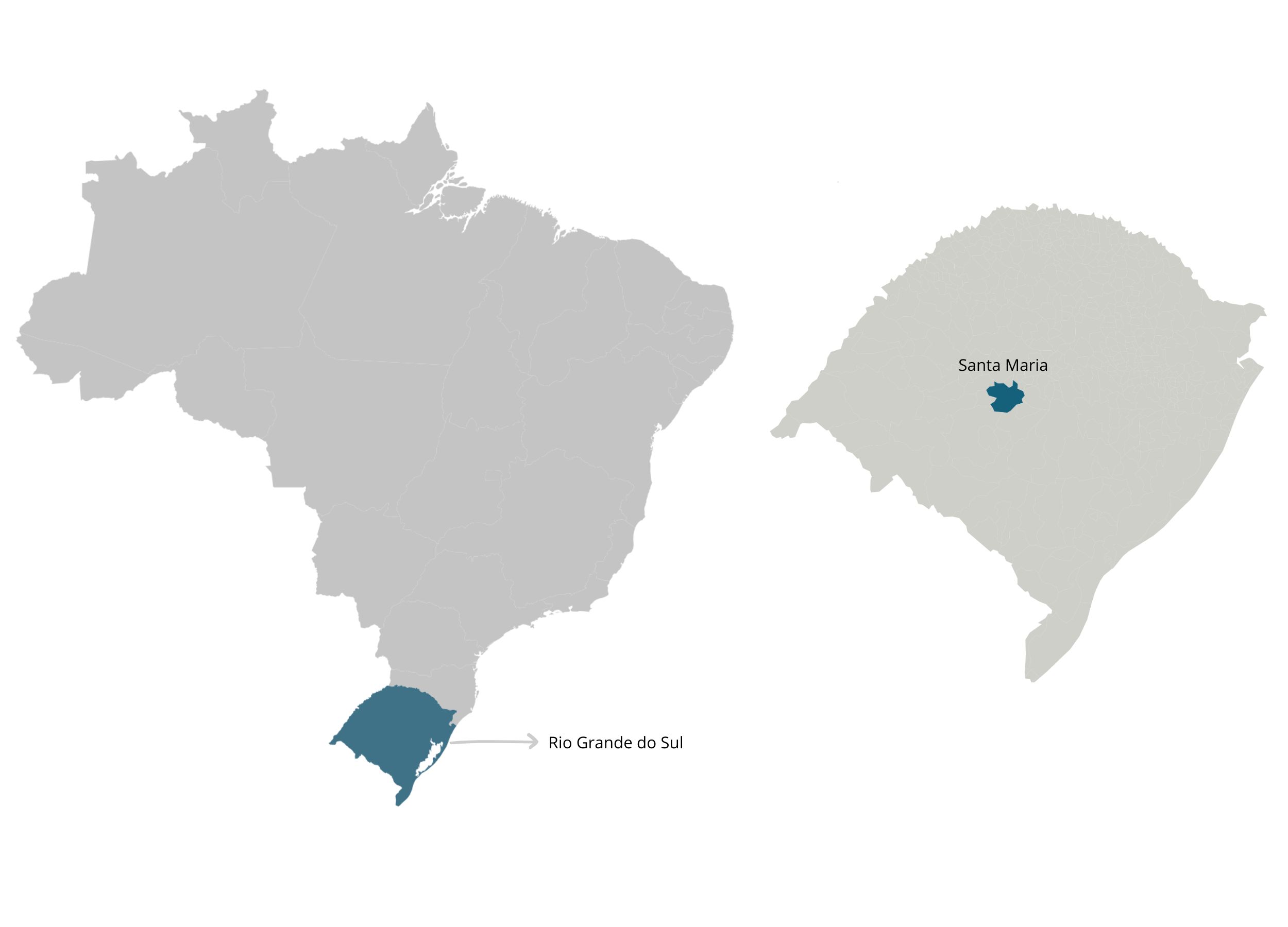
Fig. 1. Geographic location of Santa Maria, Rio Grande do Sul, Brazil.
The analyzed space is a classroom on the second floor of the Architecture and Urbanism building at the Federal University of Santa Maria (UFSM), in use since December 2019. Four corner classrooms occupy this floor, each with distinct orientations and fenestration layouts. The investigated classroom is located on the northwest corner and has a total floor area of 123.39 m² (12.84 × 9.61 m) with a ceiling height of 3.19 m. Unlike the other classrooms on the floor, which feature openings on a single façade, this room has windows distributed across the north (four openings) and west (three openings) façades (Fig. 2, where the analyzed classroom is hatched for identification). All windows are vertical, single-glazed (8 mm clear glass), and irregular in geometry, with aluminum frames. An expanded metal mesh is installed as an external solar protection element; however, this component was not explicitly modeled in the simulations, in order to isolate the effects of window geometry and glazing properties on daylight performance.
Figure 2
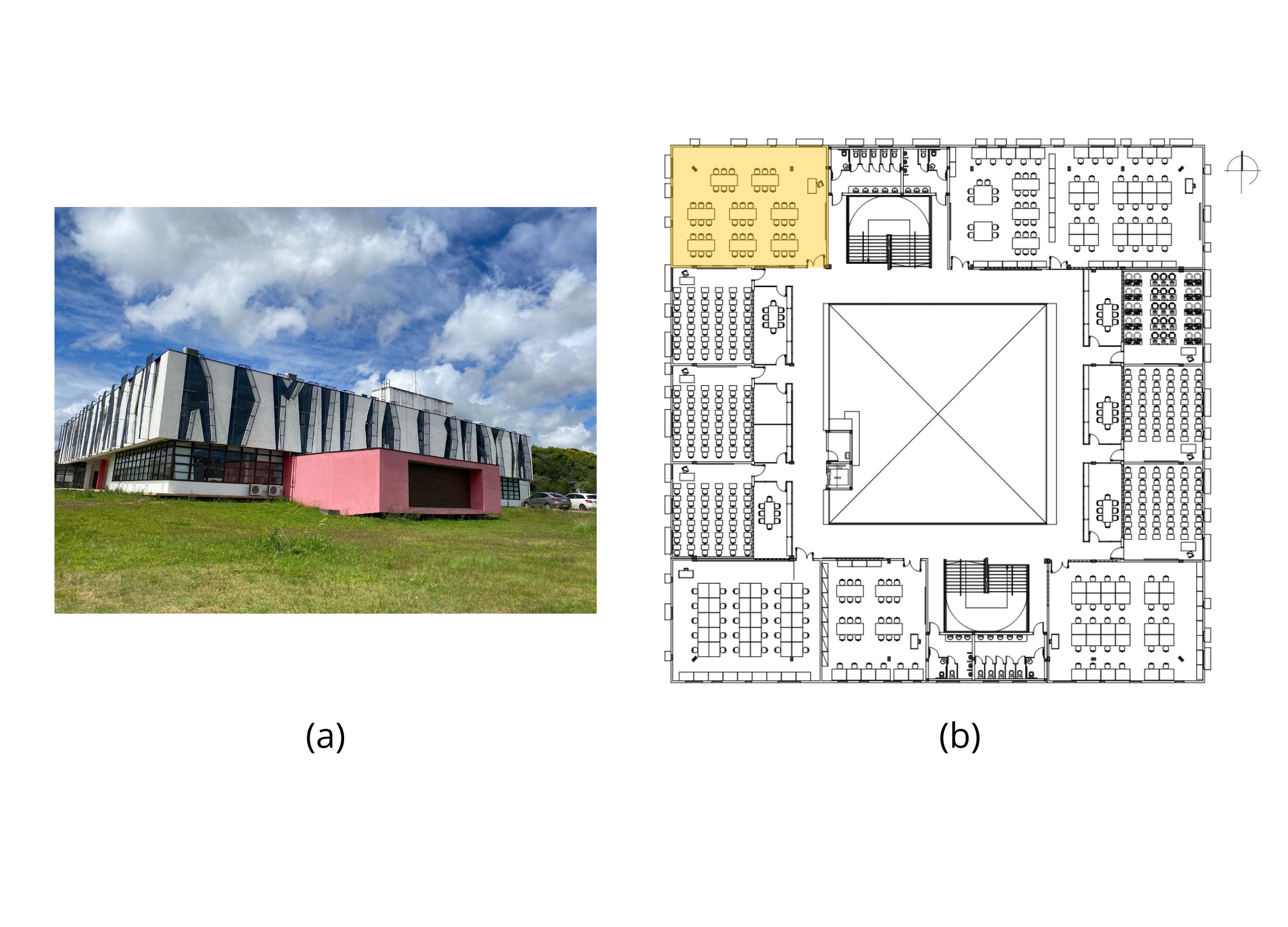
Fig. 2. (a) Architecture and Urbanism building at the Federal University of Santa Maria (UFSM). External view (left) and (b) second-floor plan (right) with the analyzed classroom highlighted.
The geometric configuration of the classroom openings was defined based on detailed dimensional surveys. On the north façade, a continuous linear opening measuring 12.00 m in length and 1.20 m in height was adopted, with a sill height of 1.50 m above the finished floor level, resulting in a glazed area of 14.40 m². This opening is centered on the façade, with lateral offsets of 0.60 m from the adjacent walls. On the west façade, the linear opening measures 9.00 m in length and 1.20 m in height, also with a sill height of 1.50 m, corresponding to a glazed area of 10.80 m², and is centered with lateral offsets of 0.45 m from the adjacent walls. The total glazed area of the two façades is therefore 25.20 m². These geometric proportions were maintained across all simulation scenarios to ensure comparability.
To assess the influence of fenestration design on daylight performance, the irregular floor-to-ceiling windows of the base case were compared with standardized window layouts of equivalent glazing-to-floor ratio (GFR) of 20% (glazing area divided by the floor area), thus ensuring comparability. The standardized window layout was defined as a simplified rectilinear configuration representative of conventional vertical fenestration commonly adopted in educational buildings, and was selected as a reference case to enable a controlled comparison with the existing irregular geometry while avoiding the introduction of additional façade variables. The comparison aimed to determine how window geometry and distribution affect daylight penetration, uniformity, and glare risk (Fig. 3).
This room was designed for Design Studio activities, with eight shared tables for group work.
Figure 3
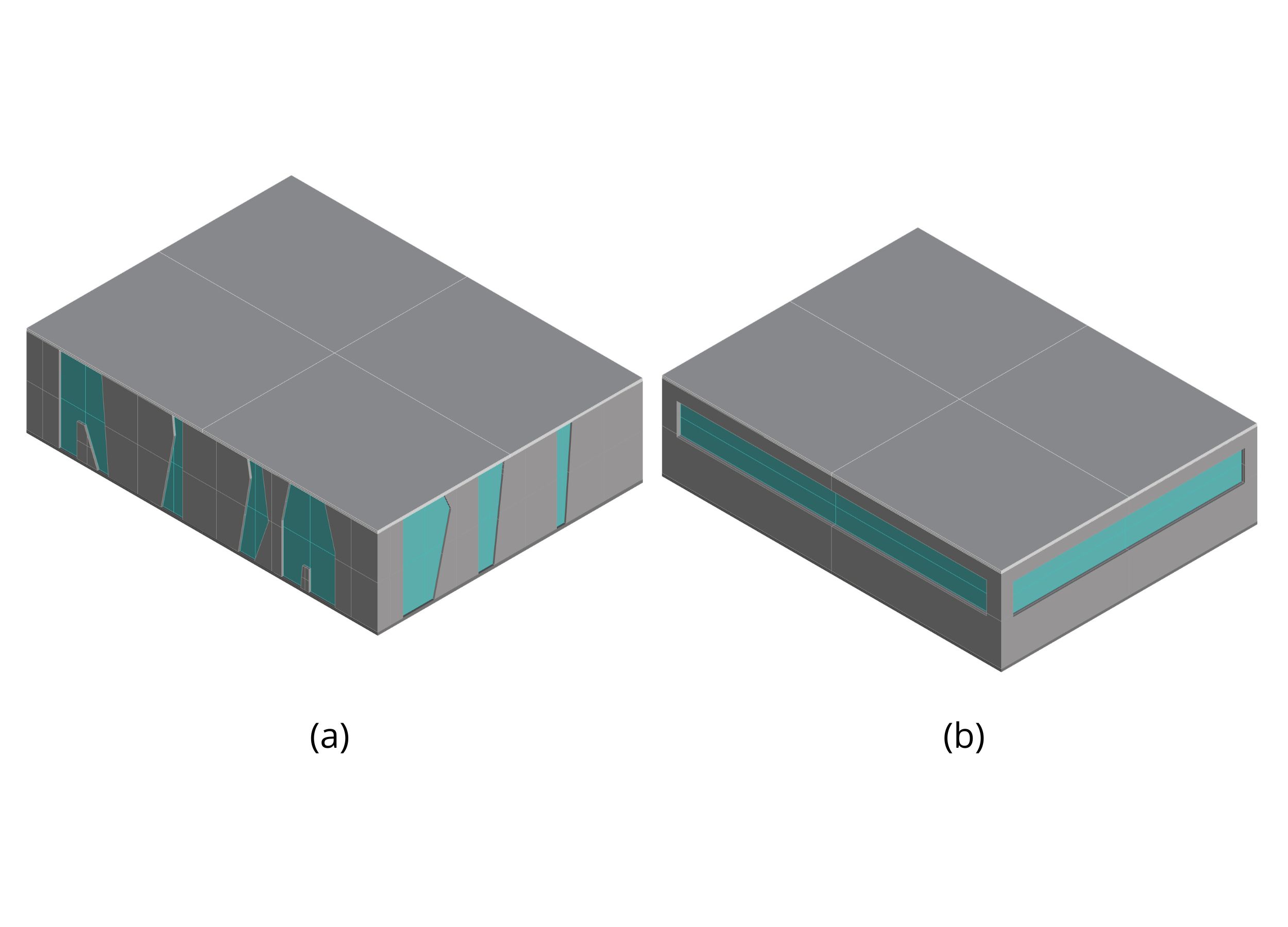
Fig. 3. (a) Comparison of window configurations: irregular floor-to-ceiling geometry and (b) standardized rectangular geometry.
Every table measured 1.50 × 2.50 m and accommodated six students in a typical architecture class, supporting hand drawing, sketching, and collaborative tasks during the early design phases. Although computers may be used in later stages of design development, the visual tasks considered in this study are representative of drawing-based studio activities rather than screen-based work.
2.2. Simulation parameters
The simulations were carried out using ClimateStudio (Rhino plugin), a Radiance-based software widely used in climate-based daylighting studies. The simulation parameters were based on real surveys performed in the room. The weather file EPW (TMY) used for the simulation [21] corresponds to the city of Santa Maria. The room occupation was set from 8 am to 6 pm, based on the actual student schedule. The surface reflectances varied from 20% for the floor, 50% for the ceiling, 80% for the walls, and 50% for furniture. The five glazing typologies were simulated for each window geometry to identify more efficient solutions for daylight levels (Table 1).
Table 1

Table 1. Glazing characteristics.
This study uses daylight metrics to assess daylight quantity and quality in different window geometries, consistent with LEED v4 requirements. In both configurations, the total glazing area was kept constant at 25 m², corresponding to approximately 20% of the floor area, to ensure comparability between the irregular and standardized layouts. The windows had an average sill height of 1.40 m and window height of 1.20 m, distributed along façades measuring 9 m on the north side and 12 m on the west side. These geometric proportions were maintained across all simulation scenarios to isolate the effects of window configuration and glazing type. It should be noted that the simulation outcomes are inherently dependent on the geometric proportions adopted for the window configurations. In particular, variations in the aspect ratio, subdivision, or vertical distribution of the standardized rectangular window would likely influence daylight penetration, uniformity, and glare-related metrics.
Daylight Autonomy expresses the percentage of occupied hours in a year in which a minimum illuminance level is achieved on the work plane. In this work, sDA (300/50%) was used, which indicates the percentage of floor area receiving at least 300 lux for 50% of the occupied hours [22]. Similar to sDA, the UDI represents the distribution of illuminance levels across intervals (300–3,000 lux), identifying failing (< 100 lux), supplemental (100–300 lux), acceptable (300–3,000 lux), and excessive levels (> 3,000 lux) [23]. To complement sDA and UDI, the Annual Sunlight Exposure (ASE1000/250) indicates the percentage of floor area receiving more than 1,000 lux for over 250 occupied hours annually. Visual comfort and glare risk were assessed at the annual, area-based scale using ASE in combination with sDA, UDI, and daylight illuminance uniformity, while point-based glare perception metrics, such as DGP, dependent on occupant position and view direction, were considered outside the scope of this geometry-focused comparative analysis. Finally, daylight illuminance uniformity refers to the spatial distribution and variation of daylight levels within an interior environment. Significant discrepancies in illuminance across a space can lead to visual discomfort and eye strain. The Chartered Institution of Building Services Engineers (CIBSE) provides guidelines for assessing both the uniformity and distribution of daylight. Daylight illuminance uniformity is defined as the ratio between the minimum and average illuminance values within a task area, and it should be maintained above 0.3 to ensure adequate visual comfort [24].
Daylight simulations were conducted using ClimateStudio, based on the Radiance and Daysim engines, employing internally calibrated default parameters consistent with LEED v4 methodology (typically corresponding to Radiance values of ambient bounces 5–7, ambient divisions 2,000–4,000, ambient super samples 256–1,000, ambient resolution 300–500, ambient accuracy 0.10, and limit weight 0.0001). The calculation grid used a sensor spacing of 0.6096 m, with the work plane set at 0.762 m above the finished floor. The classroom is a dual-aspect space with north and west orientations, which were kept constant in all scenarios so that performance differences reflect window geometry and glazing typology rather than orientation effects.
2.3. Performance evaluation framework
The assessment involved three complementary steps: (1) Results for sDA, UDI, and ASE were compared against LEED v4 daylighting criteria, which requires sDA 55% and ASE 10%. This allowed testing whether each configuration met international daylighting standards for classrooms. (2) Ranking method: Inspired by the comparative framework [25], each scenario was ranked according to its performance in daylight sufficiency (sDA, UDI), overexposure (ASE), and daylight factor (DF). Rankings were aggregated into a performance score to highlight trade-offs between daylight availability and glare risk (Table 2). The ranking system applies a five-point scoring scale for Daylight Ratio (DR), sDA, and UDI. Additionally, daylight illuminance uniformity is assessed with a binary score, assigning either one point or zero depending on whether the recommended value is met. (3) Architectural interpretation: Beyond numerical analysis, results were examined to inform design decision-making. Particular attention was given to: The daylight performance implications of retrofitting large floor-to-ceiling windows compared to standardized vertical fenestration. The challenge of achieving uniform daylight distribution in classrooms with irregular geometries. The implications for architects when choosing between standardized vs. irregular window patterns, balancing aesthetics, daylight performance, and construction adaptability.
Table 2
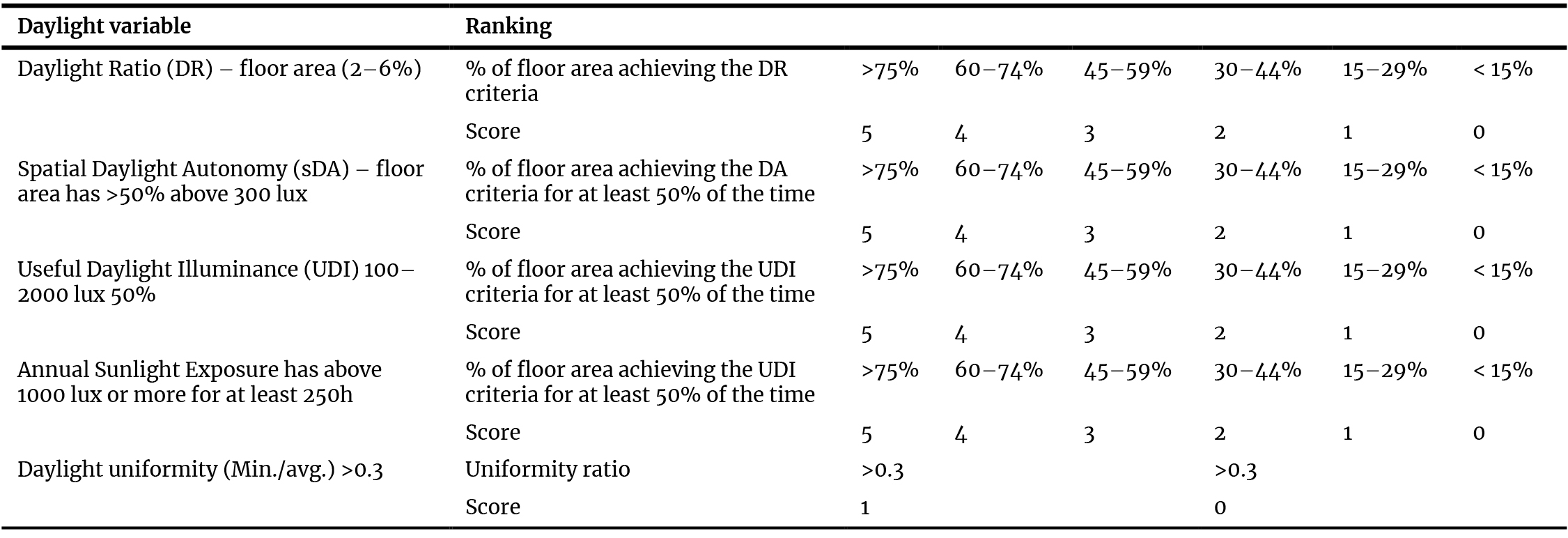
Table 2. Daylighting parameters.
The ranking framework, adapted from Al-Ashwal et al. [25], was developed as a qualitative-quantitative synthesis tool rather than a weighted or normalized multi-criteria decision model. Each daylight metric (sDA, UDI, ASE, daylight illuminance uniformity and daylight ratio uniformity) is evaluated independently and assigned a discrete score based on predefined performance ranges (Table 2), derived from recognized standards and guidelines. All metrics are treated with equal weight.
The daylighting performance in the classroom was evaluated using two complementary uniformity metrics. The Daylight Illuminance Uniformity was obtained from the ratio between the annual minimum and mean illuminance values recorded on the work plane, considering the variation of natural light throughout the year as described in the local climate file. This approach enables the analysis of the dynamic behavior of daylight under realistic sky conditions. In parallel, Daylight Factor (DF) Uniformity was assessed as the ratio of the minimum to the mean annual DF values, under the CIE Overcast Sky condition. This metric provides a static and comparative evaluation of the potential for indoor daylight distribution, independent of seasonal climatic variations.
The combined use of these two approaches enabled characterization of both the intrinsic luminous distribution performance of the space and its response to environmental variations throughout the year.
3. Results and discussion
3.1. Daylight Performance
The daylighting results revealed substantial contrasts between the two fenestration geometries and highlighted the modulatory effect of glazing transmittance. As shown in Fig. 4, the standardized rectangular configuration consistently achieved higher daylight sufficiency than the irregular layout, with sDA values between 94.34% (VT = 88%) and 19.34% (VT = 13%). Even with glazing of very low transmittance (VT = 13%), the standardized geometry still reached values above the equivalent irregular case. By contrast, the irregular floor-to-ceiling geometry presented lower overall sufficiency, ranging from 67.26% (VT = 88%) to only 7.15% (VT = 13%). This demonstrates that while glazing selection can modulate performance, window geometry remains the dominant driver of daylight autonomy. However, the increase in daylight sufficiency under the standardized configuration was counterbalanced by the elevated ASE (1000/250h). With glazing VT 76%, ASE remained constant at 45%, far above the LEED v4 threshold of 10% in standardized windows. Even with low-transmittance glazing (VT = 13%), ASE only dropped to 38%, still well beyond acceptable comfort limits. In contrast, the irregular geometry moderated direct sunlight more effectively, with ASE values ranging from 22% (for VT = 88–52%) to 18% (for VT = 13%).
Figure 4
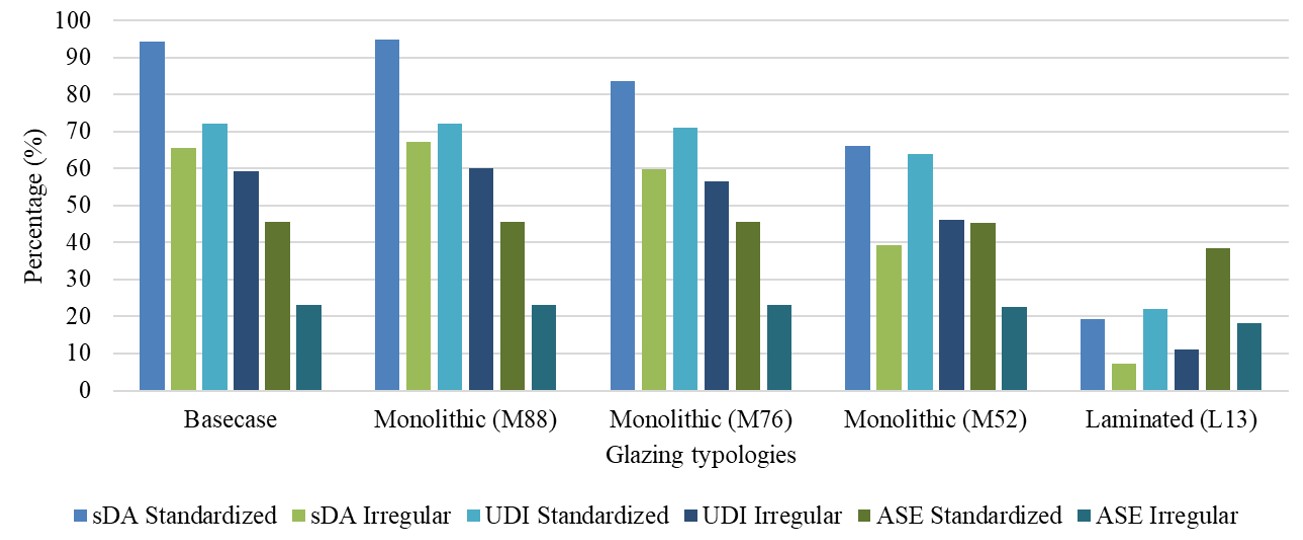
Fig. 4. Comparison of daylighting metrics (sDA, UDI, and ASE) for standardized and irregular window configurations with different glazing types.
This comparison confirms a clear sufficiency–overexposure trade-off. Standardized fenestration patterns maximize daylight penetration and ensure compliance with sufficiency benchmarks, but at the expense of visual comfort. Irregular geometries, while limiting overexposure, often fail to achieve minimum sDA thresholds, particularly under glazing of reduced transmittance.
The behavior of ASE and daylight illuminance uniformity is strongly influenced by the interaction between window geometry and sun-path characteristics. In the subtropical climate analyzed, high solar altitudes during summer and low-angle solar incidence in winter increase the frequency and depth of direct sunlight penetration through north and west-facing façades. In the standardized window configuration, the more continuous vertical openings allow direct solar radiation to penetrate deeper into the space during a larger number of occupied hours, resulting in higher ASE values and steeper luminance gradients near the façades. In contrast, the irregular window geometry partially fragments solar access, leading to reduced peak illuminance levels and limiting annual sunlight exposure. This modulation of direct solar penetration also contributes to slightly higher illuminance uniformity, as the contrast between perimeter and deeper zones is reduced.
Taken together, these findings emphasize that window geometry, more than glazing type, determines the balance between sufficiency and glare risk. In the subtropical context of southern Brazil, neither geometry alone meets the dual requirement of high sDA and low ASE. This paradox underscores the necessity of integrated strategies, where geometry and glazing are considered jointly, to achieve both compliance with international daylighting standards and the creation of visually comfortable learning environments.
3.2. Evaluation against certification criteria
To assess compliance with international benchmarks, the results were compared against the daylighting thresholds defined in LEED v4, which requires sDA300/50% 55% and ASE1000/250h 10%. As shown in Table 3, none of the simulated scenarios achieved simultaneous compliance with both criteria. For the standardized configuration, all glazing types met or exceeded the required sufficiency, with sDA values ranging from 66% to 94%—well above the 55% threshold—except for the case with VT = 13%, which fell below compliance (sDA equals to 19%). However, ASE levels remained critically high in every case, ranging from 38% to 45%, far above the recommended maximum of 10%. These results indicate that while the standardized geometry guarantees daylight sufficiency, it consistently fails in terms of visual comfort and glare control.
Table 3
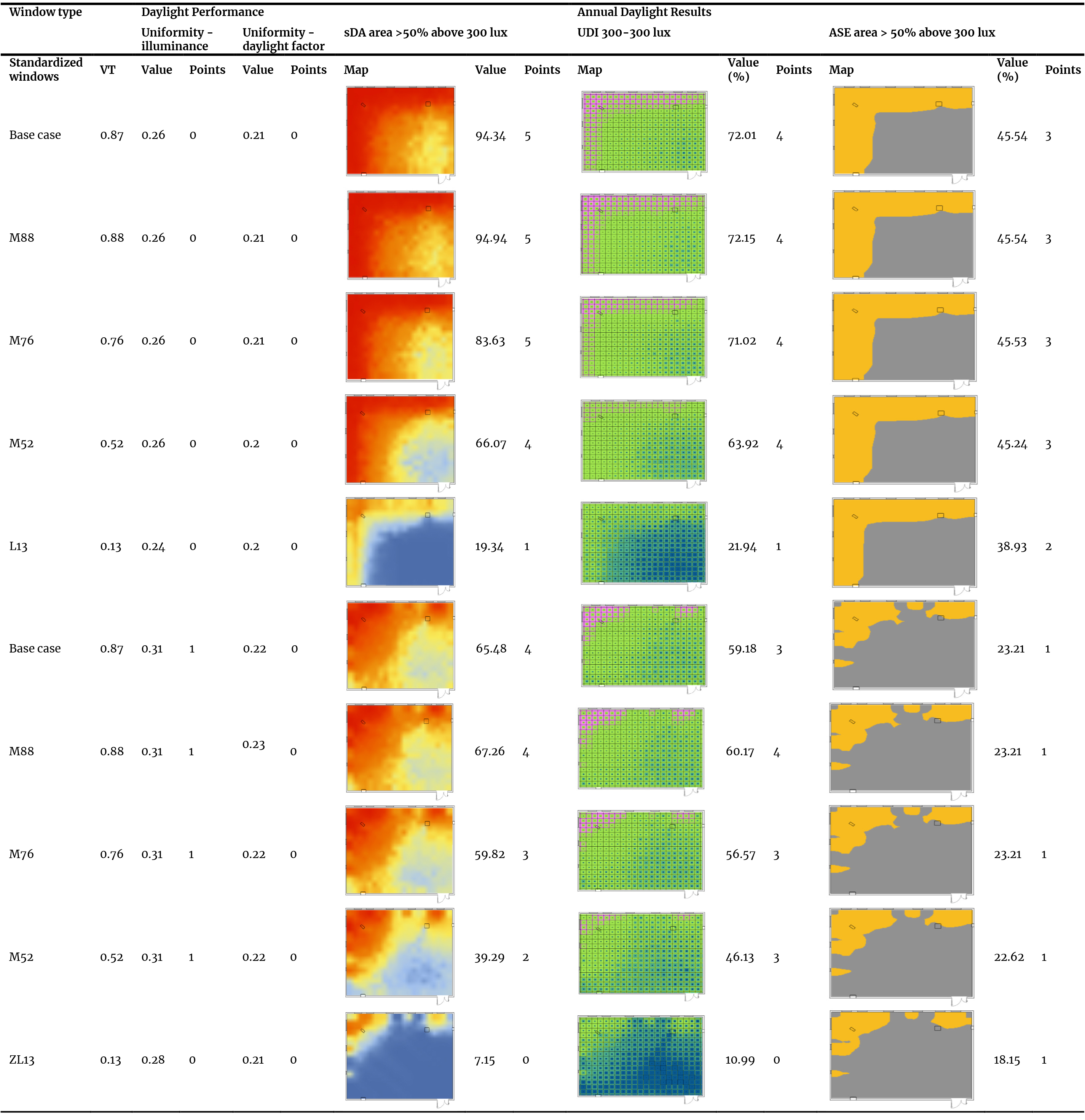
Table 3. Comparison of daylight performance maps and metrics (sDA, UDI, ASE) for standardized and irregular window configurations.
In contrast, the irregular geometry ensured substantially lower ASE values (18-23%), yet these still exceeded the LEED [17] upper limit. At the same time, sufficient performance proved inconsistent: although glazing with VT higher than 76% reached or surpassed the 55% sDA benchmark, lower-transmittance glazing fell short (39% and 7% for VT = 52% and 13%, respectively). This evaluation highlights a critical limitation: geometry and glazing adjustments alone were insufficient to secure LEED v4 compliance in the subtropical context analyzed. The standardized layout achieved sufficiency but failed in glare control, while the irregular layout moderated overexposure but struggled with sufficiency. These findings suggest that additional design strategies—such as external shading, light shelves, or dynamic blinds—would be required to meet certification criteria in classrooms under comparable climatic conditions.
3.3. Ranking
The daylight performance results for the evaluated window configurations (Basecase, M88, M76, M52, and L13) indicate a clear relationship between visible transmittance (VT) and the availability of natural light within the analyzed space. The metrics assessed included uniformity based on Daylight Illuminance and Daylight Factor, sDA, UDI, and ASE. Table 3 summarizes the daylight performance according to the ranking established based on Al-Ashwal et al. [25].
Both configurations exhibit similar uniformity of illuminance, with values ranging between 0.24–0.26 for standardized windows and from 0.28-0.31 for irregular windows. This indicates that the spatial distribution of daylight remains relatively consistent regardless of window geometry. However, the irregular windows display a slight improvement in uniformity of illuminance (0.31) compared to the regular configuration (0.26), suggesting that geometric irregularities in the window design may promote a more diffuse light distribution, showing that irregular window configurations achieved the minimum value established by CIBSE.
The sDA results demonstrated that standardized windows perform better overall in providing daylight autonomy. For standardized configurations, the highest sDA values exceed 90% (Basecase and M88), while for irregular windows the maximum recorded values are 65.48% and 67.26%, respectively. This reduction indicates that the irregular window geometry limits daylight penetration depth and the proportion of the space achieving the minimum daylight threshold (300 lux). As VT decreases, the sDA values in both groups decline sharply, though the reduction is more pronounced for irregular geometries — reaching only 7.15% in the L13 case.
The UDI results followed a similar pattern. Regular windows achieved values between 72.15% and 63.92% for higher VT cases, whereas irregular windows exhibited lower results, ranging from 60.17% to 46.13% for comparable transmittance levels. This difference indicates that irregular geometries, while potentially improving light diffusion near the window, reduce the overall daylight availability deeper within the space. The lowest-performing configuration (L13) presented a UDI of 10.99%, confirming the dependency of daylight sufficiency on VT.
ASE values are consistently lower for irregular windows (approximately 23%) compared to standardized ones (around 45%). This reduction implies that irregular window shapes effectively mitigate direct sunlight penetration and the risk of glare or excessive luminance. In particular, the L13 configuration achieved the lowest ASE (18.15%), consistent with its minimal daylight transmittance. The results suggest that irregular geometries may enhance visual comfort by controlling direct solar exposure, albeit at the expense of daylight sufficiency.
The findings reveal a trade-off between daylight availability and glare control. Standardized windows, particularly those with higher VT (Basecase and M88), provide superior daylight autonomy and useful illuminance, making them more suitable for spaces prioritizing daylight sufficiency. Conversely, irregular window designs, while offering improved Daylight Illuminance Uniformity and reduced ASE, result in substantially lower daylight autonomy and UDI values. Therefore, the choice between regular and irregular geometries should be guided by the intended balance between daylight access and visual comfort.
Beyond the numerical comparison, the results provide relevant insights for architectural design and regulation. The analysis confirmed that geometry is the dominant factor shaping daylight distribution. The standardized rectangular layout ensured high levels of sufficiency, but at the expense of excessive overexposure, while the irregular configuration mitigated glare risk but failed to provide adequate sufficiency. These contrasting outcomes indicate that glare control cannot be solved by geometry alone, just as glazing transmittance cannot offset the fundamental limitations imposed by window shape and distribution.
A critical implication of these findings is that area-based requirements alone are insufficient to guarantee visual comfort. Many design standards and building regulations adopt fixed ratios of window-to-floor area (commonly around 20%) as a proxy for adequate daylighting. In this study, however, both geometries complied with the 20% ratio. Yet, their daylight performance diverged: the irregular configuration produced insufficient sDA values despite meeting the requirement, while the standardized layout delivered very high sDA but exceeded ASE limits several times over. This evidence demonstrates that equivalent glazing areas do not necessarily produce equivalent daylight conditions, underscoring the limitations of ratio-based prescriptions.
For architects and designers, this highlights the need to go beyond aperture ratios and to consider geometry, distribution, and orientation as equally decisive parameters. For policymakers and regulators, it suggests that performance-based daylight metrics should complement or replace fixed area ratios in building codes, ensuring that both sufficiency and comfort are achieved in practice. In the subtropical climate of southern Brazil, this issue becomes even more pronounced: high solar altitudes in summer amplify the risks of excessive illuminance near façades, while seasonal variation increases dependence on electric lighting in deeper zones.
4. Conclusion and future studies
This study evaluated the influence of window geometry and glazing typology on daylighting performance in a university classroom located in southern Brazil, under a subtropical climate. By comparing two configurations—an existing irregular floor-to-ceiling layout and a standardized rectangular layout with equivalent glazing area (25 m², approximately 20% of the floor area)—the analysis isolated window geometry as a design variable while controlling for material and climatic conditions.
The results demonstrated that window geometry plays a decisive role in shaping daylight distribution and compliance with daylighting benchmarks. The standardized configuration provided higher levels of daylight sufficiency but also led to excessive overexposure, exceeding recommended comfort limits. In contrast, the irregular configuration consistently reduced glare risk, yet frequently failed to meet minimum daylight sufficiency requirements, particularly when combined with lower-transmittance glazing. These findings indicate that, in the analyzed context, neither window geometry nor glazing properties alone are sufficient to simultaneously ensure adequate daylight availability and visual comfort.
The ranking framework developed in this study proved effective in synthesizing multiple daylight metrics and enabling a structured comparison of trade-offs between daylight sufficiency and overexposure. The results highlighted that high-transmittance glazing (VT 76%) enhances daylight availability but substantially increases glare risk, whereas lower-transmittance glazing mitigates overexposure at the expense of illumination levels.
Beyond individual metric values, this comparison revealed that area-based indicators—such as the commonly adopted 20% glazing-to-floor ratio—are inadequate predictors of visual comfort. Although both configurations complied with the same ratio, their daylight performance diverged significantly, demonstrating that equivalent glazing areas do not yield equivalent luminous environments.
This research represents a single-case study, based on one classroom with specific geometric, functional, and climatic conditions. Accordingly, the results should not be generalized to all educational buildings but interpreted as analytical evidence of the sensitivity of daylight performance to window configuration. In this context, several methodological limitations should be acknowledged. The expanded metal mesh used as external solar protection was not included in the simulation model; although its physical thickness is small, such elements may influence daylight availability and glare control. In addition, the standardized window configuration was modeled as a continuous opening without intermediate frames, whereas in practical applications, rectilinear windows are commonly subdivided into multiple framed sections. This modeling choice, adopted to avoid introducing additional geometric variables, may affect daylight penetration, spatial uniformity, and glare-related outcomes. Furthermore, glare assessment was limited to climate-based metrics consistent with LEED requirements, without incorporating task-specific indicators such as Daylight Glare Probability (DGP). Future studies could extend the present analysis by addressing these aspects through comparative simulations that include external shading devices, window subdivision strategies, and DGP-based evaluations, particularly for screen-based activities.
In subtropical regions such as southern Brazil, where high solar altitudes and seasonal variability intensify the trade-offs between daylight sufficiency and glare, these results underscore the importance of integrating complementary design strategies—such as external shading devices, light shelves, or adaptive blinds—to reconcile performance and comfort. In practical terms, excessive daylight exposure was predominantly associated with zones closer to the façades, indicating that shading strategies and careful placement of workstations and furniture are critical to mitigate glare while preserving daylight access. Overall, this study provides evidence-based guidance for architects and policymakers, reinforcing that daylighting design decisions must go beyond aperture size or area ratios and instead account for window geometry, glazing selection, and local climatic context.
These observations reinforce that daylight performance is a façade-related issue, and a spatial and operational one. Although the results are grounded in a subtropical context, the comparative approach adopted in this study offers a transferable analytical framework. In temperate climates, lower solar altitudes and a greater prevalence of diffuse sky conditions may attenuate overexposure risks, whereas in tropical regions higher solar intensity and frequent clear-sky conditions are likely to exacerbate glare-related challenges. Future research could build on this framework by testing additional climatic contexts and by integrating dynamic shading systems or adaptable façade components, allowing window geometry to be evaluated as part of more responsive and climate-aware daylighting strategies.
Acknowledgement
Acknowledgments to the Coordination of Superior Level Staff Improvement (CAPES) for the financial support of the research.
Funding
This work was supported by CAPES PIPD (Grant nº. 88887.104837/2025-00).
Author Contributions
Daltrozo, J.G: Conceptualization, Writing—review and editing, methodology, visualization, validation, data curation, and resources, supervision, funding acquisition, project administration. Peiter, N. L: Visualization, validation, Data curation, and resources. Gabriel, E: Conceptualization, Writing—review and editing, methodology, visualization, validation, Data curation, and resources, supervisio. Santos, I.P.: Conceptualization, supervision. All authors have read and agreed to the published version of the manuscript.
Declaration of competing interest
The authors declare no conflict of interest.
References
- C. Ticleanu, Impacts of Home Lighting on Human Health, Lighting Research & Technology, 53:5 (2021) 453-475. https://doi.org/10.1177/14771535211021064
- P. Theodoropoulou, E. Brembilla, R. Schipper, C. Louter, Glare-Based Control Strategy for Venetian Blinds in a Mixed-Use Conference Space with Fully Glazed Facades, Journal of Building Engineering, 82 (2024) 108181 https://doi.org/10.1016/j.jobe.2023.108181
- L.V. de Abreu-Harbich, V.L.A. Chaves, M.C.G.O. Brandstetter, Evaluation of Strategies that Improve the Thermal Comfort and Energy Saving of a Classroom of an Institutional Building in a Tropical Climate, Building and Environment, 135 (2018) 257-268. https://doi.org/10.1016/j.buildenv.2018.03.017
- A.I. Samiou, L.T. Doulos, S. Zerefos, Daylighting and Artificial Lighting Criteria that Promote Performance and Optical Comfort in Preschool Classrooms, Energy and Buildings, 258 (2022) 111819. https://doi.org/10.1016/j.enbuild.2021.111819
- Z. Yang, B. Becerik-Gerber, L. Mino, A Study on Student Perceptions of Higher Education Classrooms: Impact of Classroom Attributes on Student Satisfaction and Performance, Building and Environment, 70 (2013) 171-188. https://doi.org/10.1016/j.buildenv.2013.08.030
- Z.S. Zomorodian, M. Tahsildoost, Assessing the Effectiveness of Dynamic Metrics in Predicting Daylight Availability and Visual Comfort in Classrooms, Renewable Energy, 143 (2019) 598-610. https://doi.org/10.1016/j.renene.2018.11.072
- S. Lee, K.S. Lee, A Study on the Improvement of the Evaluation Scale of Discomfort Glare in Educational Facilities, Energies, 12:17 (2019) 3265. https://doi.org/10.3390/en12173265
- A. Cilasun Kunduraci, E. Kızılörenli, A Design Proposal for Improving Daylight Availability of a Deep-Plan Classroom by Using Tubular Daylight Guidance Systems and Movable Shading Devices, Politeknik Dergisi, 27:4 (2024) 1305-1316. https://doi.org/10.2339/politeknik.1266467
- Z.S. Zomorodian, S.S. Korsavi, M. Tahsildoost, The Effect of Window Configuration on Daylight Performance in Classrooms: A Field and Simulation Study, International Journal of Architectural Engineering & Urban Planning 26:1 (2016) 15-24.
- A.K. Maurya, R. Kumar, A. Kumar, Assessing Window Design's Impact on Daylight Uniformity in Classrooms in Patna, India, Engineering, Technology & Applied Science Research, 13:5 (2023) 11898-11903. https://doi.org/10.48084/etasr.6212
- B.J. Alkhatatbeh, Y. Kurdi, S. Asadi, Multi-Objective Optimization of Classrooms' Daylight Performance and Energy Use in U.S. Climate Zones, Energy and Buildings, 297 (2023) 113468. https://doi.org/10.1016/j.enbuild.2023.113468
- E. Gabriel, G.C. Grigoletti, G. Meller, B. Zambonato, Daylight and Energy Performance of Side Lighting Systems in an Office Room in a Subtropical Climate, PARC Pesquisa em Arquitetura e Construção 15 (2024) 1-18. https://doi.org/10.20396/parc.v15i00.8670676
- P. Xue, Q. Li, J. Xie, M. Zhao, J. Liu, Optimization of Window-to-Wall Ratio with Sunshades in China Low Latitude Region Considering Daylighting and Energy Saving Requirements, Applied Energy, 233-234 (2019) 62-70. https://doi.org/10.1016/j.apenergy.2018.10.027
- A. Galatioto, M. Beccali, Aspects and Issues of Daylighting Assessment: A Review Study, Renewable and Sustainable Energy Reviews, 66 (2016) 852-860. https://doi.org/10.1016/j.rser.2016.08.018
- M. Boubekri, J. Lee, A Comparison of Four Daylighting Metrics in Assessing the Daylighting Performance of Three Shading Systems, Journal of Green Building, 12:3 (2017) 39-53. https://doi.org/10.3992/1943-4618.12.3.39
- U.S. Green Building Council (USGBC), LEED v4.1 for Building Design and Construction, U.S. Green Building Council: Washington, DC, USA, 2019.
- International WELL Building Institute (IWBI), WELL Building Standard v2, IWBI: New York, NY, USA, 2020.
- V. Costanzo, G. Evola, L. Marletta, A Review of Daylighting Strategies in Schools: State of the Art and Expected Future Trends, Buildings, 7:2 (2017) 41. https://doi.org/10.3390/buildings7020041
- Solemma LLC, ClimateStudio: Climate-Based Daylight Modeling Software, Solemma LLC: Cambridge, MA, USA, 2023.
- N.A. Streck, G.A. Buriol, A.B. Heldwein, L.F. Gabriel, G.M. de Paula, Linking Rainfall Variability in Santa Maria with the Pacific Decadal Oscillation, Pesquisa Agropecuária Brasileira, 44:12 (2009) 1553-1561. https://doi.org/10.1590/S0100-204X2009001200001
- L.B. Buligon, E. Gabriel, S.F.S. Lima, G.C. Grigoletti, D.G.A. Piccilli, Correction of precipitation data in weather files for the subtropical climate in southern Brazil, Sociedade & Natureza 35:1 (2023). https://doi.org/10.14393/SN-v35-2023-67645
- C.F. Reinhart, D. Bourgeois, F. Dubrous, A. Laouadi, P. Lopez, O. Stelescu, DAYLIGHT1-2-3 - A State-of-the-Art Daylighting/Energy Analysis Software for Initial Design Investigations, in: Proceedings of Building Simulation 2007, Beijing, China, 3-6 September 2007, pp. 1669-1676.
- A. Nabil, J. Mardaljevic, Useful Daylight Illuminances: A Replacement for Daylight Factors, Energy and Buildings, 38:7 (2006) 905-913. https://doi.org/10.1016/j.enbuild.2006.03.013
- C. Giarma, K. Tsikaloudaki, D. Aravantinos, Daylighting and Visual Comfort in Buildings' Environmental Performance Assessment Tools: A Critical Review, Procedia Environmental Sciences, 38 (2017) 522-529. https://doi.org/10.1016/j.proenv.2017.03.116
- N.T. Al-Ashwal, Y.W. Lim, D.B. Dalumo, P.C. Leng, Enhancing Daylighting Performance in Tropical High-Rise Apartments: Evaluating the Impact of Light Wells, Balconies, and Glazing Strategies, Architectural Engineering and Design Management 17:18 (2025) 8463. https://doi.org/10.1080/17452007.2025.2513463
2383-8701/© 2026 The Author(s). Published by solarlits.com. This is an open access article distributed under the terms and conditions of the Creative Commons Attribution 4.0 License.